
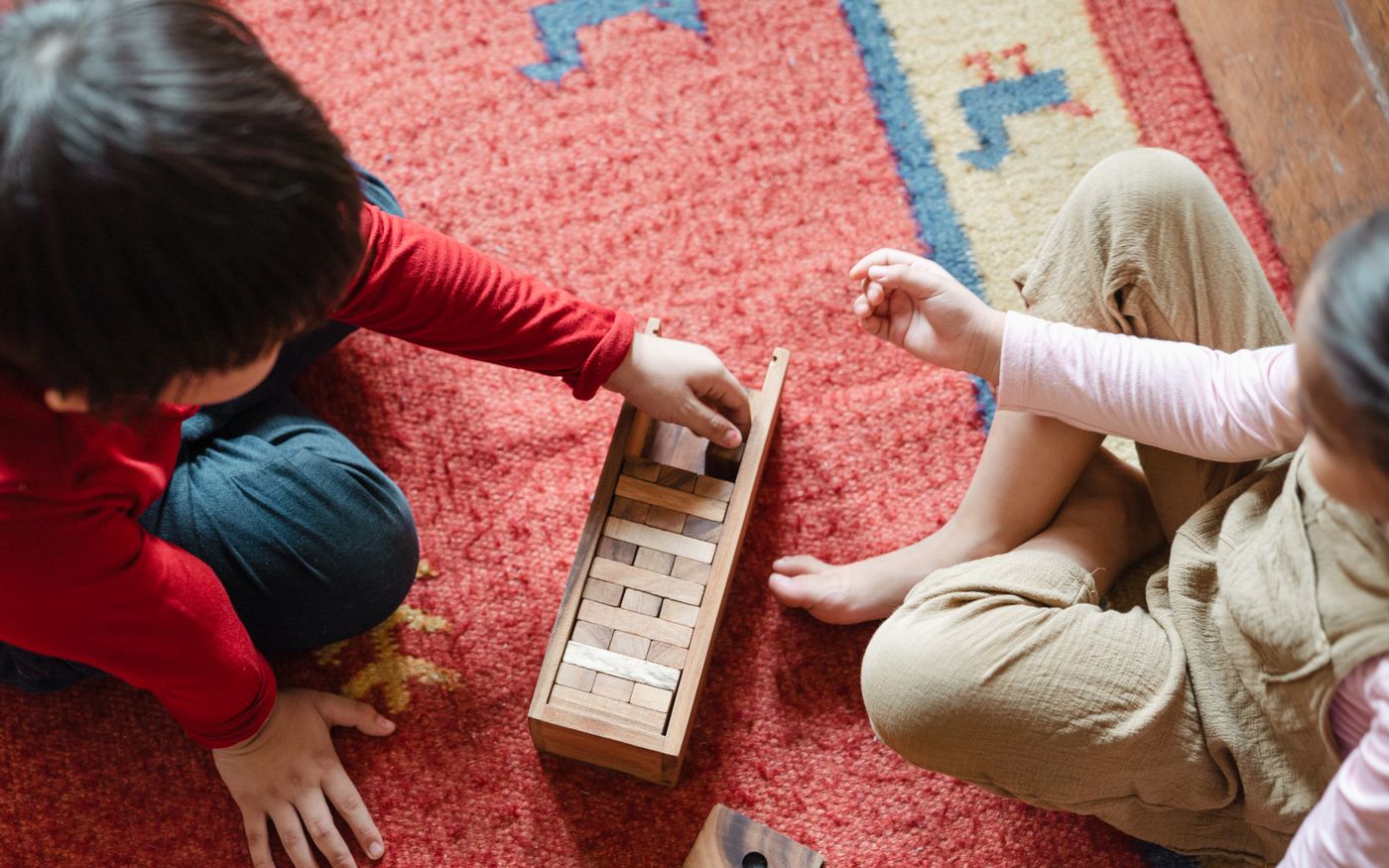
Sharing is a skill, not a personality trait
Toddlers and many preschoolers are not being selfish when they shout “mine.” They’re practicing ownership, which comes before sharing. Expecting a 2-year-old to hand over a toy mid-play is a bit like expecting them to wait politely for a turn on a single swing for twenty minutes. You can still teach it. You just can’t demand it on the first try, every time.
The goal is not a child who never minds. It’s a child who can wait a turn, trade, or play alongside someone else without a referee for every block. That takes modeling, a few house rules, and a lot of repetition at home and on playdates.
What “share” should mean in your house
Be specific. “Share” is vague. These are clearer:
- Turns: “You can use it until the timer is done, then it’s her turn.”
- Trading: “You can offer the truck for the crane.”
- Playing together: “There are enough crayons for both of you.”
- Not now: “That’s a special toy. It stays on the shelf while we have a friend over.”
It is okay to have a few “not for sharing” items. Put them away before a guest arrives, as we suggest in our playdate hosting guide. A child who knows one bear is protected is often more able to take turns with the rest.
At home with siblings
Don’t force an older child to surrender every toy the toddler touches, and don’t force the toddler to hand things over on a count of three if they’re still using them. Coach the waiting: “He’s still building. Here’s a similar block, or you can wait.” A visual timer helps more than a parent standing over them. When the timer ends, follow through kindly and firmly.
If a grab turns into a fight, separate the kids, get everyone safe, and come back to the turn when the yelling drops. Our sibling rivalry scripts cover the cooling-off; the sharing lesson comes after, not during the pull. Repair can include a turn, a trade, or help rebuilding a knocked-down tower. See teaching kids to apologize if you want a simple repair script.
Scripts that coach, instead of lecture
- “You can say, ‘I’m using this. You can have it when I’m done.’”
- “She’s not done. Let’s find something else or wait for the timer.”
- “You wanted a turn and you waited. Now it’s yours.” Notice the wait, not just the grab you stopped.
- “I’m not going to make him give it to you right now. He can have a turn, then you.”
Avoid “nice kids share” or “if you don’t share, the friend goes home” as a first move. Shame and ultimatums can produce a handoff and a lot of quiet resentment. If a playdate is truly stuck, it’s okay to change the activity or end early rather than turn the living room into a courtroom. The same short, calm language we use in public tantrum scripts works when a turn explodes.
Practice when the stakes are low
Practice turns with you first: a short timer on a favorite toy, then a trade back, with a cheerful “now it’s my turn / now it’s yours.” Snack time is another easy lab—“one cracker for you, one for me”—without a peer waiting. On the playground, start with equipment that naturally takes turns (a slide) before a single prized trike.
Kids also learn from what you do. If you snatch a phone back mid-sentence or refuse to let anyone else use the scissors, they notice. Narrate your own turns: “I’m using the tape. I’ll give it to you in a minute when I finish this.”
Public playgrounds are harder because the toys aren’t yours. A short script helps: “That’s the park’s trike. She can have a turn, then you can ask.” You can’t enforce a stranger’s turn length, so coach the ask and the wait, then be ready to move to the slide. Don’t march across the playground to demand justice from a child you don’t know—it rarely helps, and it models a fight your kid will copy.
Ages and expectations
Under about 3, parallel play and short, adult-coached turns are a win. Around 3 and 4, many kids can wait a little longer and offer a trade, with reminders. School-age kids can usually handle a house rule and a timer with less hovering, though a new friend or a brand-new toy will still stretch them. Adjust the length of the turn to the child, not to an ideal of generosity.
Sharing is often just waiting for a turn. For timers, short practice, and scripts that make “wait” mean something, see teaching kids to wait.
A grabbed toy is one of the most common hitting-and-biting setups. For the stop-and-repair plan, see toddler hitting and biting.
The slide is a public version of taking turns. For playground-specific scripts and when to move to another piece of equipment, see playground safety for kids.
When two kids used the same pile, split the tidy by what each person used. For the rest of the cleanup habit, see teaching kids to clean up toys.
A score makes sharing the moment harder. See teaching kids sportsmanship for scripts after a loss.
This guide is also listed in our routines and behavior guides.
Quick FAQ
Does “share” mean they have to hand over a toy immediately?
Not always. In your house, share can mean taking turns, trading later, or protecting a special item. Define it, then coach it.
How do we handle sharing between siblings?
Turns with a visible timer, a few things that do not have to be shared, and an adult who will interrupt grabbing. Constant refereeing usually means the rule is too vague.
When should I step in?
When someone is being hurt, a toy is being taken by force, or the turn has clearly expired. Let small negotiations happen if they are actually talking.
The bottom line
Define turns, trades, and “not now,” protect a couple of special toys, and coach the wait instead of forcing a mid-play handoff. Sharing grows from lots of ordinary practice—not from a single speech about being nice.