
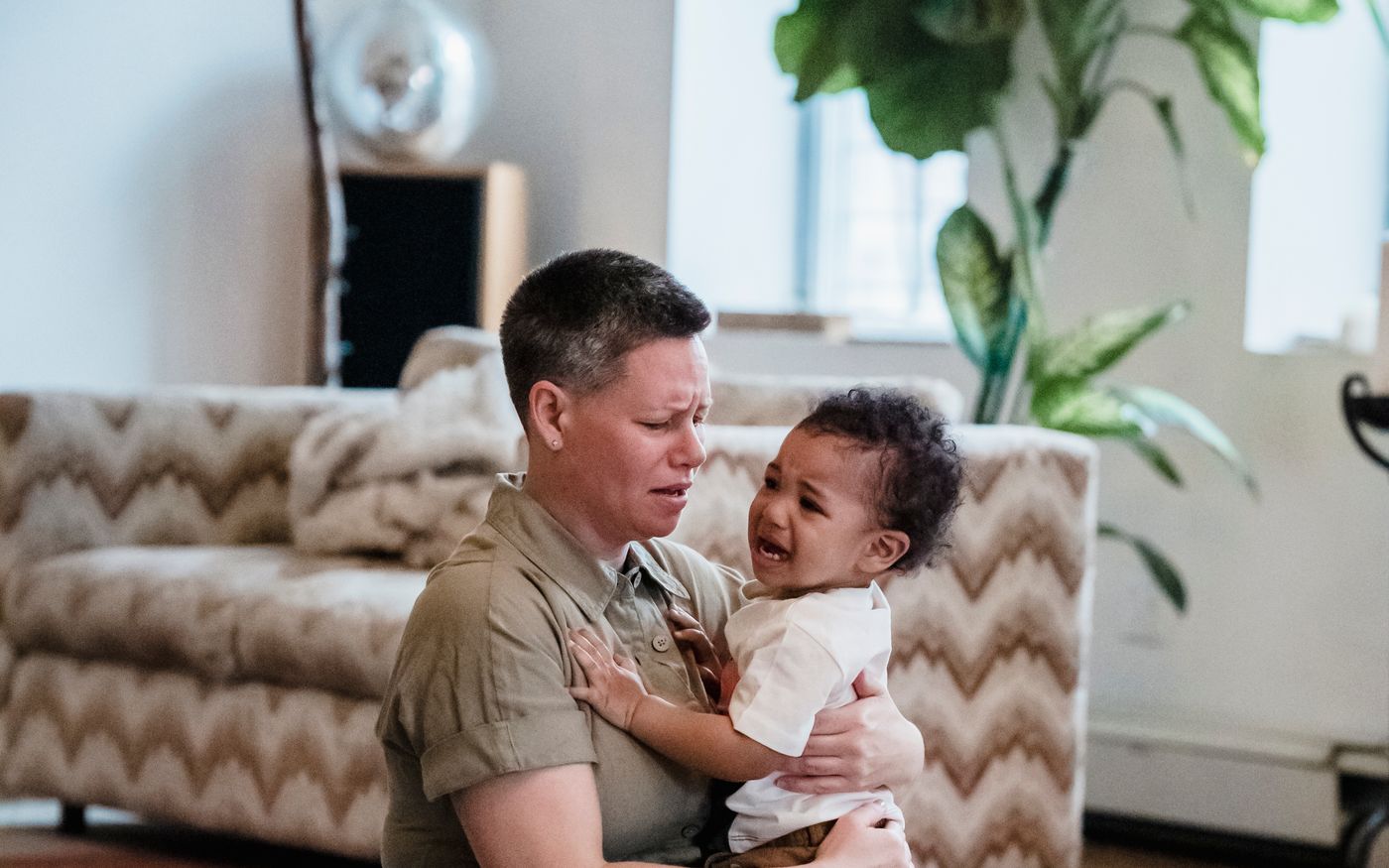
Hitting and biting are communication, and they still have to stop
A toddler who hits or bites is usually telling you something they can’t say yet: I’m overwhelmed, I want that toy, I don’t want to be picked up, I’m tired, I’m excited. That explanation matters, because it tells you what to change. It does not make the behavior okay. Your job in the moment is to keep everyone safe, stop the body, and stay calmer than the feeling. The teaching comes right after.
This sits next to our guides on public tantrums, teaching kids to share, and sibling rivalry. The same short, firm, unashamed tone works here: the behavior stops, the child is still your child, and you will help them try again.
In the moment: interrupt, protect, and get low
Move your body between kids, take the arm or move the child, and say one short line: “I won’t let you hit. I’m going to stop your hands.” If it’s a bite, “Biting hurts. I won’t let you bite.” Pick up the hurt child first if you can do it safely, or hand them to another adult, then stay with the one who hurt. Don’t bite back, don’t hit back, and don’t go for a long moral speech while anyone is still screaming.
Get everyone to a safer space. A two-minute pause in a different part of the room is not a shame corner; it’s a reset. When breathing is slower, that’s when language can land.
What to say after, when you repair
- “You were mad that he took the truck. Hitting is not okay. You can say, ‘That’s mine,’ or get a grown-up.”
- “You bit because you didn’t want to be picked up. Next time you can say ‘down’ or push my hand.”
- To the hurt child: “That hurt. I’m glad you’re telling me. Let’s get a cold cloth and a cuddle.”
A forced hug is not a repair. Help them check on the other child, offer a toy, or get ice. When they’re ready, a simple apology like the one in teaching kids to apologize can follow, not lead. Name the feeling without excusing the hurt, the same honest language as in talking to kids about feelings.
Look for the pattern, then change the setup
If it keeps happening at the same time of day, that’s a clue: late morning hunger, a too-long playdate, a crowded toy, a sibling too close during a video. Change the setup before you add more lectures. Offer a snack earlier, shorten the visit, put a special toy away, or stay within arm’s reach for a week in the situation that keeps going wrong.
Some kids bite when language isn’t there yet, or when they’re teething, or when play gets loud and they don’t know how to exit. Give them an exit word (“all done”), a place to take a break, and more practice with turns when the stakes are low. Stay close during the high-risk times instead of hoping a rule poster will do the work.
What not to do, and when to get help
Don’t shame them in front of the group, don’t label them “the biter,” and don’t joke about it later as if it were cute. Don’t ignore it and hope they outgrow it without being stopped. Consistency from every caregiver matters: the same short stop, the same repair, the same follow-through at home and at childcare.
If hitting or biting is frequent, escalating, aimed at a baby in the house, or paired with withdrawal or intense rage that doesn’t ease with your usual help, talk with your pediatrician and, if they’re in care, with the teacher. Most toddlers move through this with close supervision and a lot of repetition. You don’t have to handle a safety problem alone.
On a playdate, it’s okay to end early if a pattern is starting. Tell the other parent the facts, not a character study: “He bit when the toy was taken. We stopped, we left, and we’re working on it.” Then do the work at home.
After a hard day, you can still have an ordinary evening. Don’t retell the bite at dinner as a story for the table. Do a little extra one-on-one later if you can—a book, a walk, a snack—so the child who hurt someone also gets connection that isn’t only a correction. Tomorrow, stay close in the same situation and practice the new line before play starts.
This guide is also listed in our routines and behavior guides.
Quick FAQ
What should I do in the moment when they hit or bite?
Interrupt, protect the other person, get low, and use a short, firm line. Then, when everyone is safe, help them repair. The behavior has to stop even if it is communication.
Is hitting or biting always a phase?
It is common in toddlers, and it still needs a consistent response. Look for patterns—hunger, tiredness, crowding—and change the setup when you can.
When should we get extra help?
If it is frequent, escalating, directed at a baby, or not improving with a consistent plan, talk with your pediatrician or a child-development specialist. You do not have to wait until you are desperate.
The bottom line
Stop the body, keep everyone safe, and teach a better line once things are calm. Hitting and biting fade when the setup gets easier and the stop is consistent—not when a child is shamed into being “nice.”