
Keep it shorter than you think
A good first playdate is 60 to 90 minutes, not a whole afternoon. Toddlers and preschoolers often do well for an hour and then fall apart over a toy, a snack, or being tired in someone else’s house. End while it’s still going reasonably well. “Come at 9:30, I’ll have them back at 11” is a complete plan. You can always go longer once you know the two kids together.
Morning after breakfast, or right after a nap, beats late afternoon. If the weather is decent, start outside. If it’s not, our rainy-day indoor ideas are built for low-prep play without emptying the craft closet.
Set the stage before the doorbell
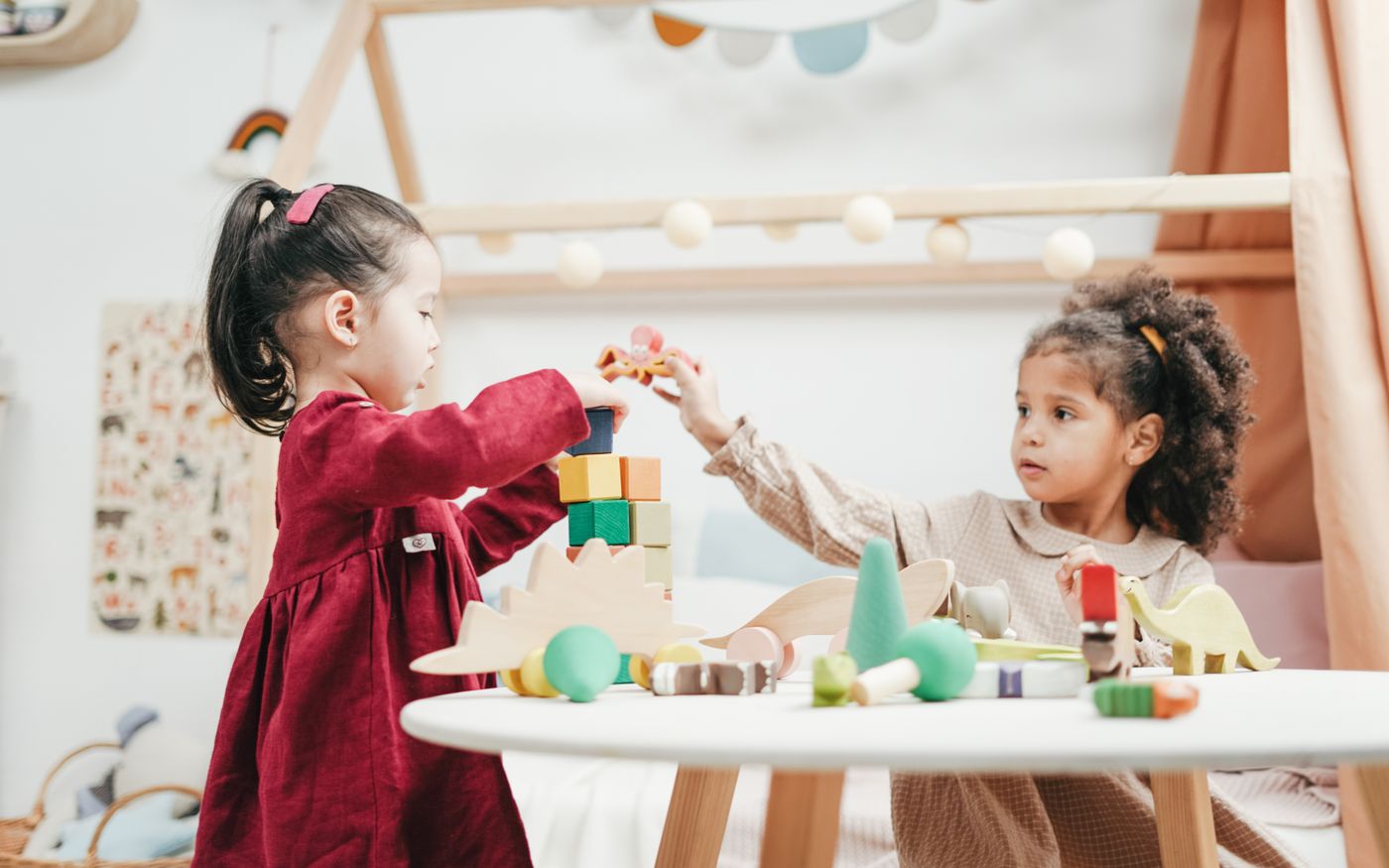
Put away the one toy your child cannot stand to share, and leave out two or three open-ended options: blocks, a play kitchen, cars, a blanket fort, sidewalk chalk. A table with everything you own on it is how a playdate becomes a cleanup fight. If you have a dog or a baby, set a simple boundary before guests arrive: “The baby’s room stays closed. The dog will be in the crate while we play.”
Tell your child the plan in one breath: “Maya is coming after breakfast. You’ll play, we’ll have a snack, and then she goes home before lunch.” Previewing the end makes the goodbye less surprising.
Food, allergies, and a simple snack
Ask about allergies and food rules when you set the time, not when the snack comes out. Offer one familiar snack and water, not a party spread. Sit them down for it, then go back to play. If a child has a serious allergy, keep that food out of the house for the visit and wash hands and the table before they eat.
When play starts to wobble
It will. Two kids plus toys is a lot of “mine.” Coach, don’t referee every turn:
- “That one’s in use. Here’s another truck, or you can wait.”
- “We’re taking turns with the markers. The timer is for both of you.”
- Change the scene before it boils: go outside, start a snack, or bring out one new activity.
If someone gets hit or a child is done, separate them, get everyone safe, and be willing to end early. A short, honest text to the other parent—“It’s getting late for us, can I bring Sam home a little early?”—is better than pushing through a meltdown. For in-the-moment language, the calm scripts in our tantrum guide work in a living room too.
Siblings, and ending on time
If a sibling is home, give them a job or a special “their” activity so the playdate isn’t just two kids plus a left-out third. If that’s impossible, keep the visit short or plan the playdate during a nap or a grandparent walk. Sibling friction on playdate days is normal; our sibling rivalry scripts can help after the guest leaves.
End at the time you said. Give a five-minute warning, help with one quick cleanup (a timer helps), and do a simple goodbye. Don’t start a new game at minute 88. Thank the other parent, mention one thing that went well, and tell your child later what they did that helped—shared a toy, got a tissue, said goodbye—so the next visit starts from a win.
You do not have to entertain the children the entire time, and you also shouldn’t disappear into another room with a very young first-time pair. Be nearby, stay available, and let them play. A slightly boring, well-timed playdate is a success.
Hosting at a park, and being the guest
A playground playdate solves a lot of “mine” problems because the equipment is shared already. Agree on a meeting spot, a 60-minute window, and who brings a snack. You still need to watch for crowded slides and kids who wander, and you should still end on time.
When you are the guest, arrive at the time you set, tell your child the house rules you know (“shoes off, the cat stays in the bedroom”), and be ready to leave if your child is done. Bring a spare change of clothes, and don’t assume the host can extend. A short thank-you text after, with one specific kind detail, makes the next invitation easier for everyone.
If your child hoards toys or has a hard time with transitions, start with a one-on-one visit at a park, or invite just one friend, before you host two at once. Success is a reasonably happy hour, not a Pinterest afternoon.
If sharing is the part of a playdate that keeps falling apart, put special toys away first and use the turn-and-timer scripts in teaching kids to share.
If you’re hosting a first sleepover, keep the evening shorter than a party in your head. See kids first sleepover for bedtime, bags, and a pickup plan.
When you’re the visiting family, a short preview and a clear leave-time help the host too. See teaching kids to be good guests.
Build two minutes of tidy into the goodbye so you’re not left with the whole room. See teaching kids to clean up toys.
A sitter in your house is not a playdate, and it still helps to leave a simple activity started. See leaving kids with a babysitter.
This guide is also listed in our routines and behavior guides.
Quick FAQ
How long should a playdate last?
Shorter than you think: often 60 to 90 minutes, not an open afternoon. Leave or end while it is still going well.
Do I need a big activity plan?
No. A simple snack, a few open toys, and a defined end time are enough. Overplanning often creates more friction.
What if someone gets hurt or the play turns unkind?
Interrupt, help them repair, and end early if it cannot be reset. A shorter playdate you would host again is better than a long one that goes badly.
The bottom line
Keep it to an hour or so, put away the un-shareable toy, ask about allergies ahead of time, and end while it’s still going well. A playdate is practice for sharing and goodbye, not a test of how long everyone can last in your living room.