
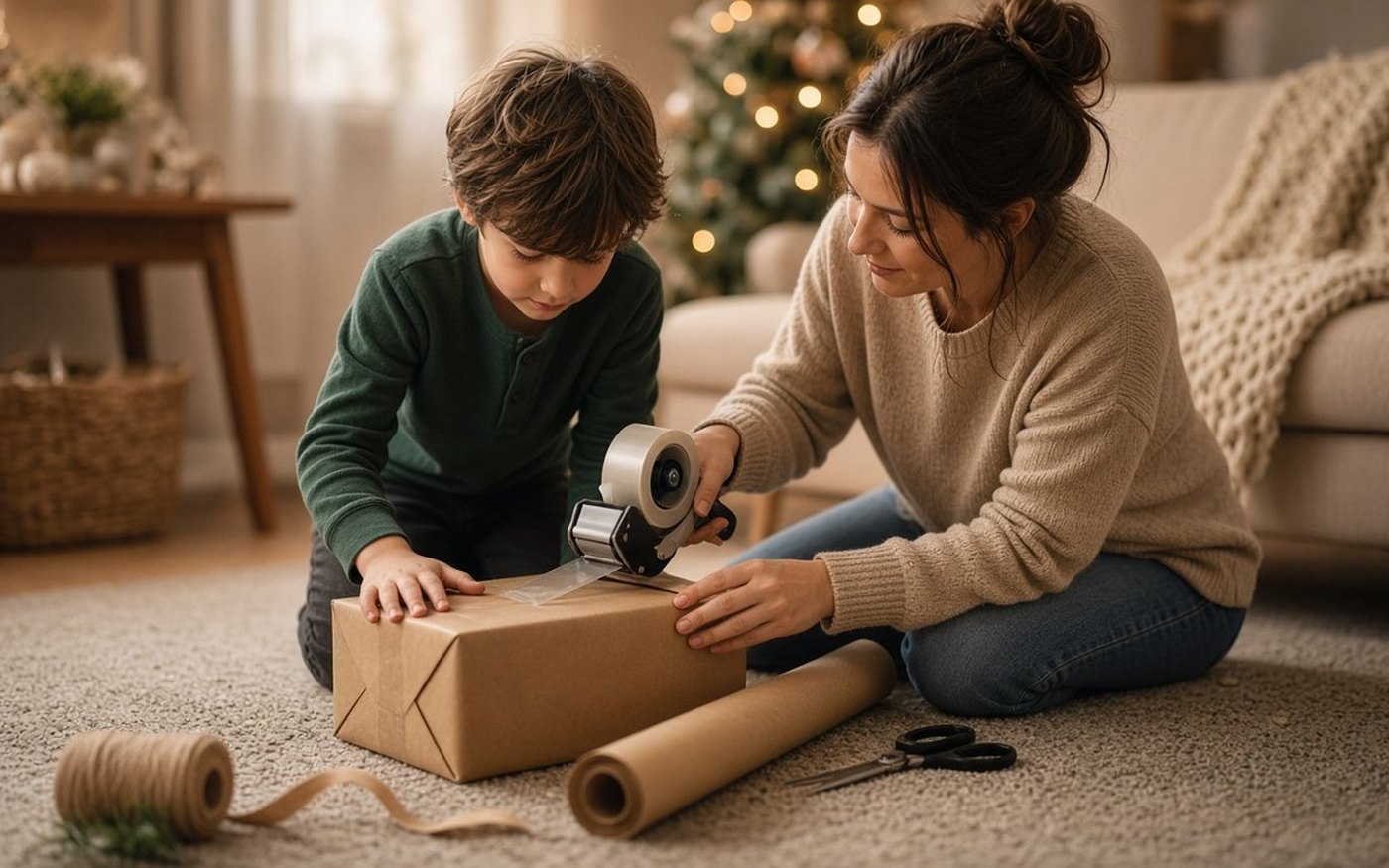
Why wrapping is worth teaching
Wrapping a gift is a small life skill with a few hidden lessons in it: measuring, folding, using scissors and tape, and thinking about someone else. Kids who wrap the presents they give feel more connected to the giving, not just the getting. And a lumpy package wrapped by a six-year-old is often the one grandparents keep the paper from.
You don’t need a perfect corner. The goal is a child who can wrap a box well enough that the gift is covered, and who is proud to hand it over. This guide covers setup, a simple step-by-step method for boxes, what to do with odd shapes, and how to handle the inevitable crumpled paper.
Set up a wrapping station they can use
Work on the floor or a cleared table, not the couch. Gather everything before you start: paper, tape, scissors, ribbon, and gift tags. A tape dispenser that stays put is much easier for small hands than a loose roll. Kid-safe scissors cut most wrapping paper fine; an adult can make any long cuts. Lay a towel or old sheet underneath if your floor is carpeted and you want an easy cleanup.
Start with the easiest gifts: boxes. A small, sturdy, rectangular box, like a shirt box or a book, is the best first project. Save the oddly shaped toy for later. If the gift isn’t in a box, put it in one; it makes everything easier.
Choose paper with a grid on the back if you can find it. The printed lines help kids cut straight. Thicker paper also tears less than thin dollar-store rolls, which helps with early frustration.
A simple method for wrapping a box
- Measure. Set the box on the paper. Roll the paper around the box to check that it covers all sides with a little overlap. Mark or fold where to cut.
- Cut. Cut along the line. Younger kids can cut while you hold the paper flat. If the edge is ragged, fold it under for a clean look.
- Wrap the middle. Center the box on the paper, upside down. Pull one long side up and tape it to the box. Pull the other side up, fold the edge under, and tape it over the first.
- Fold the ends. At one end, push the sides in so they make two triangle flaps. Fold the top flap down and the bottom flap up, and tape. Repeat on the other end.
- Finish. Add a bow, ribbon, or a tag, and write who it’s for and who it’s from.
Do it side by side, each wrapping your own box, instead of narrating while they watch. Kids learn faster by copying your hands step by step. Show one step, wait for them to do it, then move to the next.
Odd shapes, bags, and shortcuts
Not every gift fits in a box. For soft things like stuffed animals or clothing, a gift bag with tissue is easier and still feels special. Kids can choose the bag and stuff the tissue, which is very satisfying. For round or bumpy items, gather the paper at the top and tie it with ribbon, like a candy wrapper. It looks intentional.
Let them decorate plain paper. Brown kraft paper or a roll of white paper plus crayons, stamps, or stickers makes a personal wrap. A drawing on the package counts as a gift too. It’s a great job for a child who isn’t ready for scissors, and it works well alongside writing thank-you notes later in the season.
Reuse what you have. Newspaper, comics, kids’ art, and saved gift bags all work. This also connects with conversations about what gifts are for; our guide to holiday gifts and wants vs needs has more on keeping the season about people instead of piles.
Keep it fun, and keep secrets safe
Wrapping is best in short sessions. Wrap three or four gifts, then stop. A wrapping marathon on December 23 is how tape ends up in someone’s hair. Put on music, and let the results be imperfect. Resist fixing their corners. If a package is truly falling apart, retape the bottom quietly where they can’t see it.
If they are wrapping a gift for a sibling or a parent, give them a private spot and some time. Kids love keeping a surprise. If they are wrapping gifts for themselves to give to others, let them choose the paper and write the tag. That ownership is the point.
Finish with a short cleanup: scraps in the recycling, scissors put away, tape returned. That small habit makes the next wrapping session easier. It’s the same idea as cleaning up toys: the job isn’t done until the floor is clear.
This guide is also listed in our holiday and season guides.
Quick FAQ
What age can kids wrap presents?
Preschoolers can decorate paper and stuff gift bags. Many five- and six-year-olds can wrap a small box with help. By seven or eight, most can wrap a box mostly on their own.
What’s the easiest way for kids to wrap a gift?
Start with a small box and grid-backed paper. Wrap the middle, fold the ends into triangles, and tape. For odd shapes, use a gift bag with tissue.
Should I fix my child’s wrapping?
Mostly, no. A lumpy package they wrapped means more than a neat one you redid. Quietly retape it only if the gift will fall out.
The bottom line
Teaching kids to wrap presents takes a simple station, an easy box, and a few steps you do side by side. Let younger kids decorate or use bags, keep sessions short, and don’t fix their corners. Wrapping their own gifts makes the giving part of the holiday feel like theirs, and that’s worth a little extra tape.