
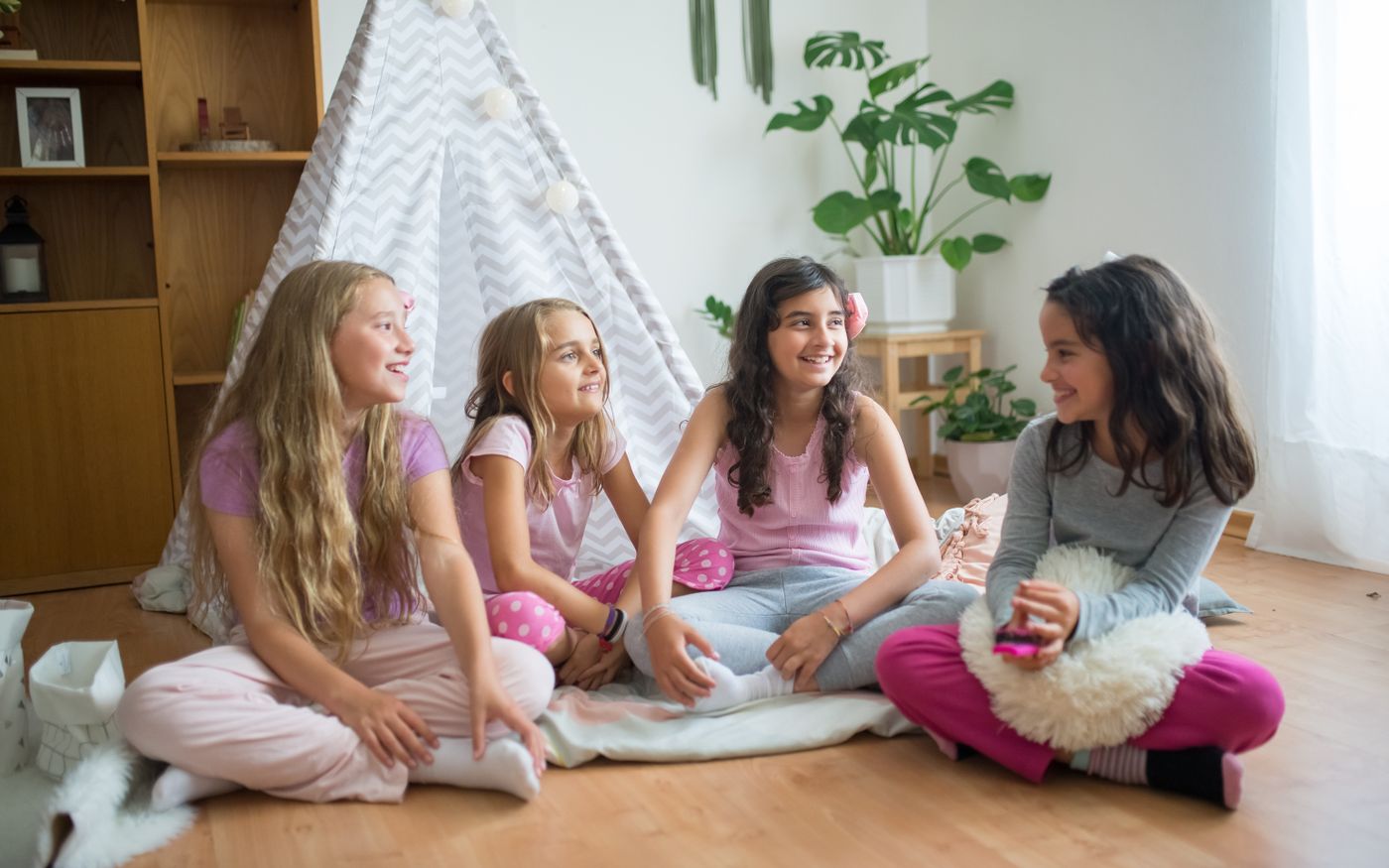
The first sleepover can be short, close, and optional
There is no required age for a first night away. Some kids are ready for a grandparent’s house at 5; others want to come home at 9 p.m. at 8. Readiness looks like this: they can do most of their bedtime routine with a little help, they can tell an adult what they need, and they want to try. Wanting to try matters. A first sleepover is a stretch, not a test you have to pass on a particular birthday.
Start close to home—a grandparent, a cousin, a family you already trust—before a big birthday-party sleepover with a crowd. A “sleepover” that ends after movies, with a planned pickup at 8:30, is a perfectly respectable first try. You can always extend the next time.
Preview the night, and pack a bag together
A day or two ahead, walk through what will happen: “You’ll have dinner at their house, play, put on pajamas, and sleep in the guest room. I’ll say goodnight on the phone, and I’ll pick you up after breakfast.” Let them ask the same questions more than once. If the dark is already a hard thing at home, don’t assume a new room will be easier; take the night-light plan from our fear of the dark guide with you.
Pack together: pajamas, tomorrow’s clothes, a toothbrush, the lovey or blanket, a night light if they use one, and one small comfort book. Put a spare shirt and underwear in the bag. Let them carry something. A first-night bag that’s familiar is the same idea as the box we recommend when moving to a new house—the comforts travel with the child, not in a maybe-we’ll-find-it pile.
Agree on a pickup plan before you leave
Tell your child and the hosting adult what will happen if they want to come home. A simple plan: they can tell the grown-up, the grown-up will call you, and you will come. You don’t have to present this as a likely failure. You present it as a door that’s allowed to be used. Many kids sleep through once they know the door exists.
Decide in advance whether you’ll do a goodnight call or just a goodbye at the door. One short call is plenty. A long, teary video chat at 9 p.m. can restart the whole goodbye. Stay for a few minutes at drop-off if that helps, then go while things are still okay, the same idea as a calm preschool drop-off.
For the hosting house (or when you’re the host)
Ask about dinner, bedtime, screens, and where they’ll sleep. Share allergies, a usual bedtime, and the comfort object. If you’re hosting, keep the evening shorter than a party in your head: a meal, one activity, pajamas, and a reasonable lights-out. Our playdate guide still applies—put special toys away, have a snack plan, and don’t overschedule.
A sleeping bag on the floor next to a friend’s bed is often better than a dark guest room down the hall. A hallway night light and a clear path to the bathroom prevent a lot of 2 a.m. panic. Keep breakfast simple and the pickup time honest.
If they want to come home—or if they don’t sleep
Coming home is not a failure. Go get them if that’s the plan, keep the car ride quiet, and put them in their own bed without a lecture. You can say, “You tried a sleepover. Next time we can try a later pickup, or try again at Grandma’s.” A child who comes home once often stays the next time, because they learned you’ll come and that the night is still allowed to end.
If they stay but sleep poorly, expect a wobbly next day and a familiar bedtime routine the following night at home. Don’t stack a second sleepover the same weekend. One stretch at a time is enough.
Talk with the host about medications, a comfort object, and anything that usually happens at bedtime (a song, a stuffy, a light). If your child still uses a pull-up at night, pack it without embarrassment and tell the host once, privately. A first sleepover is not the night to also quit a sleep habit. Keep the new thing to one: the new bed, in a house they already know.
A night at a friend’s house is a different skill from a night with grandparents. For the family version, see overnight at grandparents.
A sleepover is one night at a friend’s, with a parent down the hall; camp is a different jump. See first sleepaway camp.
This guide is also listed in our routines and behavior guides.
Quick FAQ
When is a child ready for a first sleepover?
When they can sleep away from you in a familiar place, want to go, and can use the bathroom and say what they need. Ready is optional; you can wait.
Should we agree on a pickup plan in advance?
Yes. Tell both kids and the host that a nighttime pickup is allowed, no shame. A planned exit is kinder than a trapped, sleepless night.
What if they want to come home at 10 p.m.?
Go get them, stay calm, and try again later or not at all. Coming home is a reasonable end, not a character test.
This guide is also listed in our sleep guides.
The bottom line
Start close to home, pack the usual comforts, agree on a pickup plan, and treat “come get me” as an allowed door. A first sleepover is a short try, not a personality test—and a planned early pickup is a perfectly good first night away.