
A first sleepaway camp is not a sleepover with more trees
A first sleepaway camp is nights away from you, in a bunk or a cabin, with counselors instead of a friend’s parent down the hall. That is a different jump than a first sleepover, and it is not a family camping trip where you are in the next tent. The first one should be short, well-run, and close enough that you can get there if you truly need to. A week can wait until a weekend or a three-night try has gone okay.
Choose with your child, not for a résumé. Ask the camp how they handle homesickness, medication, food, and calling home. Visit if you can, or look at pictures of the actual cabins together. A first camp that matches their interest—swim, nature, a simple day-plus-nights program—beats a famous name they didn’t want. If they’re not ready, a day camp is a complete summer, not a failure.
Pack, label, and practice a little independence
Use a short list from the camp, not a department-store pile. Label everything, including the water bottle and the flashlight. Pack with them, the same way you would pack a suitcase: they put in the clothes, you do the medicines and the toiletries, and a comfort item stays near the top. A well-loved stuffed animal is allowed at almost every first camp, even if a brochure looks rugged.
Practice a few camp skills at home: a short shower, making a bunk, putting dirty clothes in one bag, and asking an adult for help. Our shower and making the bed guides are useful here, not as a test, but so the first night isn’t five new skills at once. Talk about who they can tell if they feel sick, scared, or left out: a counselor, not only a friend in the bunk.
Leave a note or a pre-addressed postcard if the camp allows mail. Skip a long, tearful letter that says you don’t know how you’ll survive. “I’m proud of you. Have a good breakfast. See you on pickup day” is enough. If calls are limited, say that in advance so a silent phone isn’t a shock.
Drop-off, homesickness, and your side of the week
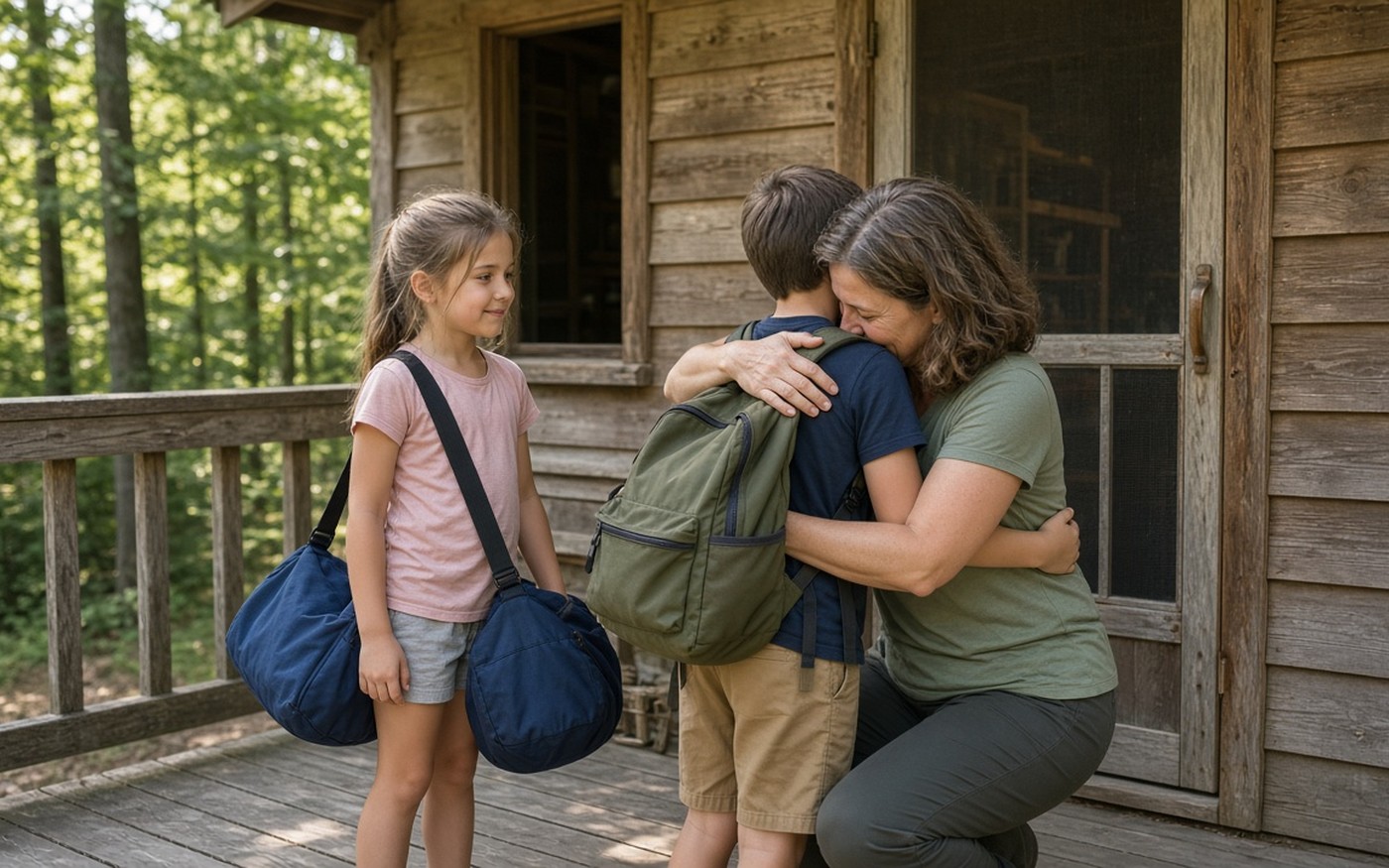
At drop-off, be kind and relatively short. Help carry the bag, make the bed if that’s useful, say goodbye, and go. Lingering usually makes it harder. If they cry, you can still leave when the counselor is ready to take over. A first-hour wobble is common and not a verdict.
Homesickness is common, and good camps expect it. They’ll usually keep kids busy, keep goodbyes out of the 2 a.m. spiral, and call you if it’s more than a rough first night. If they call and they’re sad, listen, remind them of the next meal or the next activity, and avoid a mid-week rescue unless the camp and you agree it’s needed. A planned pickup that everyone already knows is a lot easier than a maybe-I’ll-come-get-you that they hold onto all day.
Your job at home is to let the time pass without turning it into a vigil. If the camp says they’ll call if there’s a problem, believe them. If you do get a “please come” call, talk to the counselor before you drive. Some kids need to come home, and that’s all right. Some need to stay through one more night with support. You can decide without treating either choice as a life story.
Pickup, and whether to go again
At pickup, listen more than you interview. They may be tired, dirty, and full of one story they want to tell in the car. Laundry can wait an hour. If it went well, you can talk about a next time later, not in the parking lot. If it didn’t, a day camp next summer is still camp. The first sleepaway is a try, not a personality test.
If they want to go back, keep notes: what to pack less of, which medicine routine worked, whether a shorter session was the right length. If they don’t, you still practiced packing, a goodbye, and a stretch of independence. That’s useful at a grandparent’s house and at a later camp, when they’re actually ready.
Food, bugs, and a different bedtime will come up. Tell them the camp will feed them, to use bug spray the way the counselors say, and that the first night may feel long. Pack any comfort snack only if the camp allows it. Skip packing a secret phone if that breaks the camp’s rule; the policy is part of the try.
This guide is part of our travel and outings guides, where related pieces are grouped in one place.
Quick FAQ
How do we choose a first sleepaway camp?
Short, close, and aligned with something your child already likes. A first week away should be a stretch, not a test of maximum independence.
What if they are homesick?
Most kids are, at least a little. Pack a comfort item, keep your goodbye short, and follow the camp’s communication rules. A midweek pickup is a judgment call, not a failure.
Should we visit or call every day?
Follow the camp’s policy. Daily calls can make homesickness louder. A letter, a labeled care package if allowed, and a clear pickup plan are usually enough.
This guide is also listed in our sleep guides.
The bottom line
Make a first sleepaway camp short, close, and well-run, with a packing list you label together and a goodbye that doesn’t linger. Homesickness is common; let the counselors do their job, and keep a real pickup time. The try that matches your child is better than a longer session they weren’t ready for.