
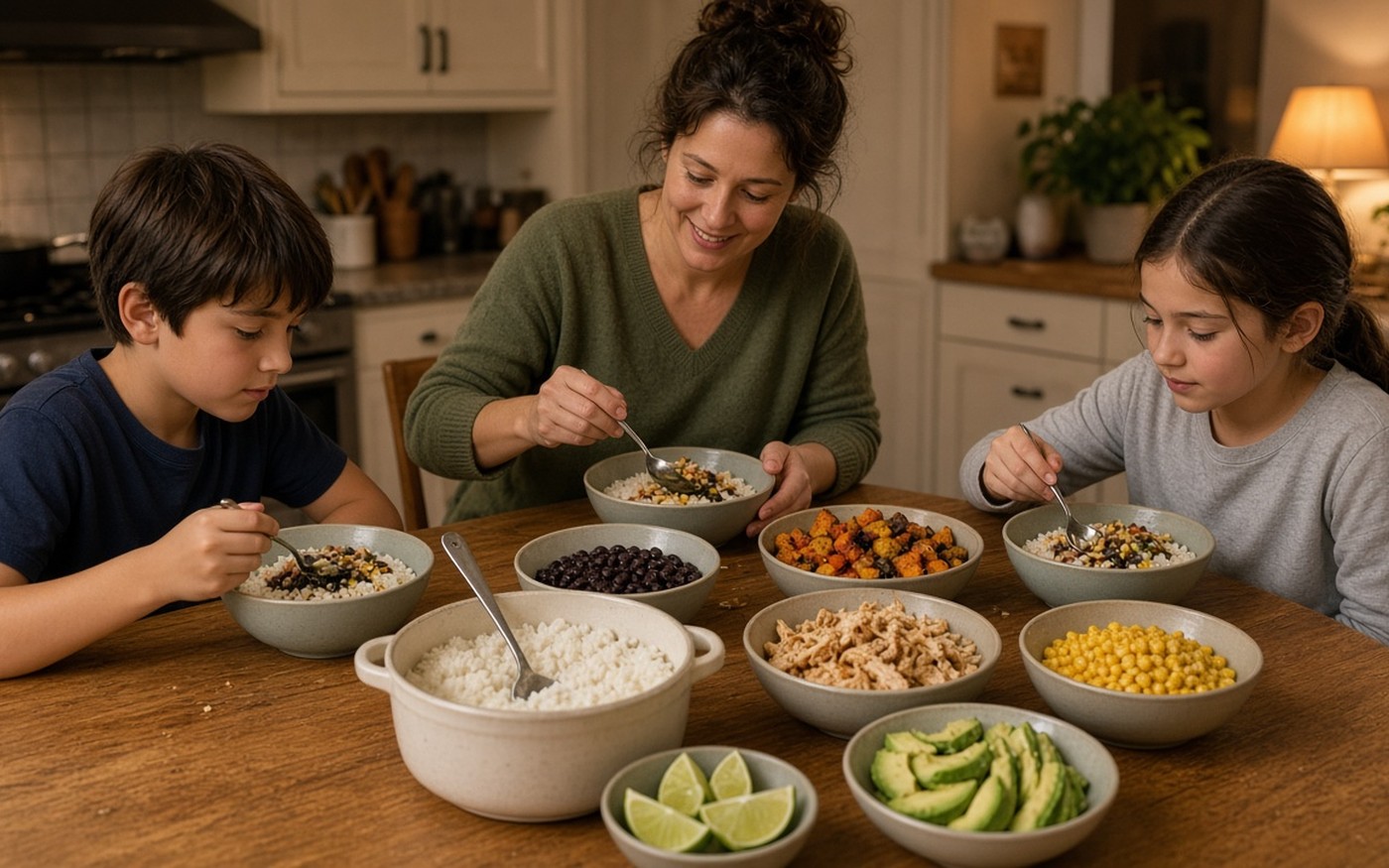
A bowl night is a bar, with a grain instead of a tortilla
Build-your-own bowl night is the cousin of taco night, not a replacement for it. You put a base in the middle—rice, leftover grains, or a bed of greens—then a few toppings people can actually choose, and everyone builds a bowl they will eat. It is also not pasta night, even if leftovers from one can become the protein on the other. The point is a weeknight that uses what you already have and lets cautious eaters keep a safe food on their side of the table.
Set out fewer toppings than a restaurant bowl menu. A grain, a protein, a vegetable, and one familiar extra is a complete bar. Beans, shredded chicken, leftover roast, tofu, eggs, roasted vegetables, corn, cucumber, or fruit can all belong. If you eat meat, it can sit next to a plant protein so more than one person can build a plate. Our iron-rich foods list is a useful shopping prompt: beans, eggs, and a vitamin-C food like tomato or citrus on the same table do real work without a lecture.
Let them build it, then sit down
Give kids a job that is actually building: spoon rice, add one topping they chose, carry the bowl to the table. You handle the hot pot and anything sharp. A toddler can point and help with a pre-scooped topping; an older child can serve themselves with a short “take what you’ll eat” rule. This is the same spirit as cooking with toddlers, just closer to dinner time.
Keep a safe food in the lineup every time: plain rice, a fruit they already like, or cheese if that’s your house. They can build a very boring bowl and still sit with the family. That’s a win. Don’t require a “taste of everything” as the ticket to being done. If you want more on pressure, use picky eater strategies; the bowl is just a friendly structure.
Sit to eat. A bowl that walks to the couch becomes a crumb trail and a shorter meal. A washable mat or an easy-wipe table helps when toppings escape, especially with younger builders. End when people are done, and put leftovers away in their own containers so tomorrow’s lunch is already half-made.
Use leftovers on purpose
Bowl night is one of the better leftover nights you can have, and it is different from a holiday leftover recap. Sunday’s roasted vegetables, leftover rice, a can of beans, and a handful of something fresh can be dinner in fifteen minutes. If the rice is from yesterday, reheat it thoroughly. If you cook a pot of grains while you pack lunches, you’ve already started. A weekly meal plan can simply say “bowls from whatever is left.”
Sauces and toppings stay optional and on the side: a little yogurt, salsa, a vinaigrette, soy sauce for those who use it. Don’t drown a cautious eater’s bowl in a new sauce. Offer, don’t pour. For younger kids, cut or mash as needed, and skip sticky gobs of nut butter or hard add-ons that aren’t age-safe.
If bowl night starts to feel like taco night in a different dish, that’s fine. Rotate the base so it doesn’t get stale: rice one week, leftover quinoa, a baked potato, or greens. The habit is the bar, not a specific cuisine. You do not need a new cookbook to do this on a Tuesday.
When it goes sideways
If they refuse to build, you can assemble a very plain bowl and sit down anyway. If the bar becomes a playground, close it and eat. If prep is making you late, use fewer bowls next time—three toppings, not nine. Partners and sitters can run the same bar from a note on the fridge: base, protein, vegetable, safe food, sit together.
A bowl night also scales to a picnic or a slightly later dinner after soccer, as long as the food is already cooked. It should not become a second short-order kitchen. The bar is open, then it’s closed. That’s the whole method.
Allergies and special diets belong on the bar, not as an afterthought. If someone can’t have a topping, keep it on a separate plate and say so once, the same way you would at allergen meals or a family dinner. A bowl night is a good way to feed more than one need from one table, as long as you don’t make the restricted eater do a second cooking shift after everyone else has started.
A bowl bar is one way to use leftovers; leftover night is serving yesterday’s meal as dinner. See leftover night.
This guide is part of our mealtime guides, where related pieces are grouped in one place.
Leftover roasted vegetables from a sheet pan can land on a bowl bar later in the week. See sheet-pan dinner with kids.
Quick FAQ
What has to be in a bowl night?
A base, a protein, and a couple of toppings you already have. It does not need a special sauce or a new grocery list. Leftovers belong here on purpose.
How do I keep it from becoming a mess of options?
Limit the bar: a few bowls, two or three toppings, and a safe option. Then sit down. An endless buffet is how dinner turns into grazing.
Is this different from taco night?
Yes. Taco night is a fillings bar with tortillas. Bowl night uses a grain or leftover base and whatever is already cooked. They can share a week without repeating the same plate.
The bottom line
Bowl night works when the bar is small, the base is a grain or greens you already have, and everyone builds something they will actually eat. Keep a safe food in the lineup, sit down, and let leftovers be the point some weeks. The Tuesday you can assemble in fifteen minutes is the one worth repeating.