
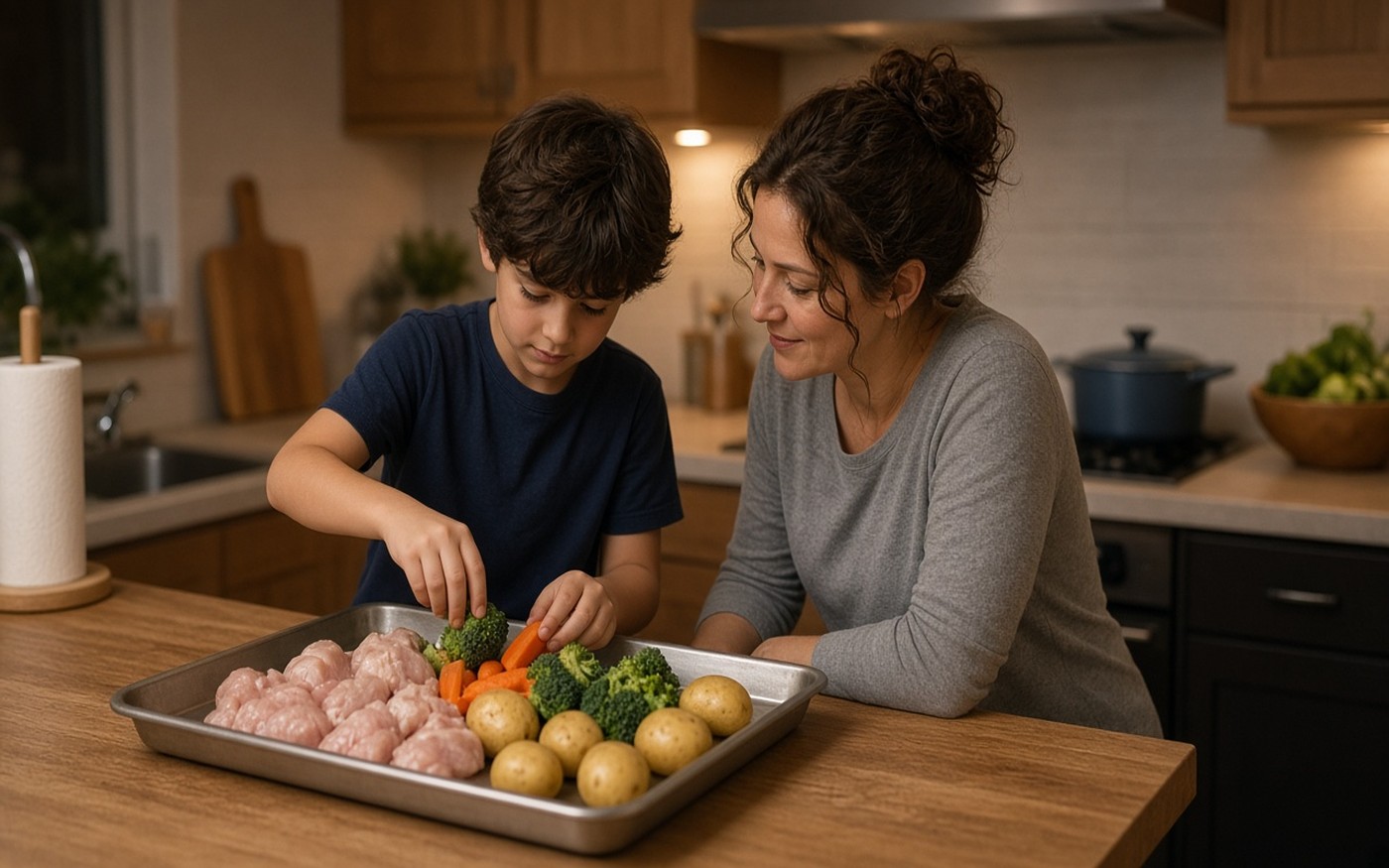
A sheet-pan dinner is one pan, one oven, and a sit-down
Sheet-pan dinner is a weeknight method: a protein and some vegetables on one pan, roasted until done, then served at the table. It is not a weekly meal plan, which is about naming the nights. It is also not a bowl night or a leftover remix, even if leftover roasted vegetables can move to those meals later. Here the point is one hot pan, a short prep, and almost no stovetop juggling.
Keep the menu small. One protein—chicken pieces, sausages you already trust, tofu, chickpeas, or fish if that is your house—plus one or two vegetables that cook in about the same time, and a starch you already have: rice in the cooker, bread, or potatoes cut small enough to roast alongside. If the vegetables need longer, start them first and add the protein later. You do not need a recipe with twelve ingredients. Oil, salt, and one familiar seasoning are enough.
Jobs kids can do, and heat they shouldn’t
A child can wash sturdy vegetables, tear lettuce for a side, put cut pieces on the pan you already oiled, or carry plates to the table. You handle the knife, the raw meat, and the hot oven. That is the same split as cooking with toddlers: real jobs, clear limits. A toddler can add a handful of already-cut carrots to a corner of the pan. An older child can toss vegetables with oil in a bowl, then spread them out.
Use a real sheet pan with a rim so juices stay put. Line it if that helps you clean, or don’t—either is fine. Give each food a little space so it roasts instead of steaming. If a cautious eater needs a safe food, keep it in its own corner, or serve fruit, bread, or plain rice on the side. Don’t require them to eat the new seasoning as the ticket to being done. Picky eater strategies still apply: exposure without a second short-order kitchen.
Set a timer and stay in the kitchen while the pan is in. Kids do not open a hot oven. When it comes out, the pan stays on the stove, not on a table a child can reach. Let it cool a minute, then plate at the counter and sit down. A washable mat or an easy-wipe table helps when roasted pieces travel, especially with younger eaters.
Timing, leftovers, and a week you can repeat
Most sheet-pan dinners take twenty-five to forty minutes in the oven, plus ten minutes of prep. That only works if the cutting happens before everyone is already hungry. A weekly plan can simply say “sheet-pan chicken and broccoli” on the night you will be home to start the oven. If you cut vegetables in the morning, or buy a pre-cut mix you trust, the evening job is even shorter.
Leftovers from a sheet pan are already cooked, which makes the next day easier. Cool them, store them, and they can become lunch or a later leftover night. Reheat until hot. This is one of the better ways to cook once and eat twice, without turning the first night into a batch-cooking project.
Allergies and special diets belong on the pan on purpose. If someone cannot have a sauce or a protein, give them their own corner or a second small pan rather than picking food off later. Cut grapes and other choking-risk sides appropriately, and keep sauces on the side for cautious eaters. If you are still introducing foods to a baby at the table, follow your allergen plan rather than improvising a new mixed roast for them.
When the pan is late, or no one likes the vegetable
If dinner is running late, serve the safe side first—fruit, bread, or rice—and bring the pan to the table when it is done. If everything is too browned, you ran the heat too high or cut the pieces too small; note it and shrink the pieces less next time. If they only eat the potatoes, that is still a sit-down dinner with a safe food on the plate. You can offer the same vegetable again another week without a speech.
Partners and sitters can run a sheet-pan night from a short note: what goes on the pan, the oven temperature, the time, and what the safe food is. You do not need a printed recipe. Rotate the protein and the vegetable so the method stays familiar and the plate does not get boring. The habit is the pan, not a specific cuisine.
Drinks stay ordinary: water or milk, not a special “dinner soda” because the pan looks festive. If you want a fuller table, a simple fruit side is enough. The pan is the dinner, not a reason to add three more dishes you then have to wash.
This guide is also listed in our mealtime guides.
Quick FAQ
What foods actually work on one pan?
A protein and one or two vegetables that cook in a similar time: chicken pieces, sausage, tofu, or fish, with potatoes, carrots, broccoli, or peppers. Cut things to a similar size so they finish together.
Can kids help with a sheet-pan dinner?
Yes: wash produce, toss vegetables with oil, and set the table. A grown-up handles the oven and the hot pan. The job should be done before the pan goes in.
What if the vegetable comes out too late or no one eats it?
Keep a familiar food on the table and serve a small amount of the new vegetable without a speech. Next time, cut it smaller or add it later so it does not lag behind the protein.
The bottom line
Sheet-pan dinner works when the menu is small, the jobs are safe, and everyone still sits down. One protein, one or two vegetables, a familiar starch, and a safe food on the side will feed a Tuesday. You handle the knife and the oven; they can help with the cool prep. The night you can start in ten minutes and clean one pan is the one worth repeating.