
A potluck is a buffet with someone else’s rules
Holiday potlucks are a gift to busy parents: you bring one dish, someone else hosts, and everyone eats. They are also a specific kind of hard with young kids. The food sits out on a long table at adult height, dinner time drifts, the house is unfamiliar, and there are twenty grown-ups talking over each other. A toddler sees a dessert table at eye level and no plan.
You don’t need to skip the party. You need a short plan for three things: what you bring, how your child gets a plate, and when you leave. This guide is about community, church, school, and friends’ potlucks in November and December. For the big family meal, see our Thanksgiving dinner with kids guide, and for overnights at relatives’ houses, holiday visits and sleep.
Bring a dish your kids will actually eat
The simplest potluck trick is also the most useful: bring something your child likes. If they eat it at home, it will be their safe food at the party. Buttered noodles, a fruit tray, mini meatballs, rolls, mac and cheese, or a vegetable tray with ranch all travel well and get eaten by adults too. You don’t have to apologize for bringing a plain dish. Plain dishes disappear first.
Label it, even informally. A folded card that says “Mac and cheese (dairy, wheat)” helps every family managing allergies, including yours. If your child has a food allergy, plan as if nothing on the table is safe until you have checked it yourself. Fix their plate before the line forms, and bring a backup meal in a container so they are not depending on the buffet. Our guide to introducing allergens is for babies at home; a holiday party is not the place to try a new one.
Pack light extras: a small roll of paper towels, wipes, a sippy or water bottle, and a bib or a washable placemat for a toddler. The host is busy and doesn’t need to find you a spoon.
Make your child’s plate before you make yours
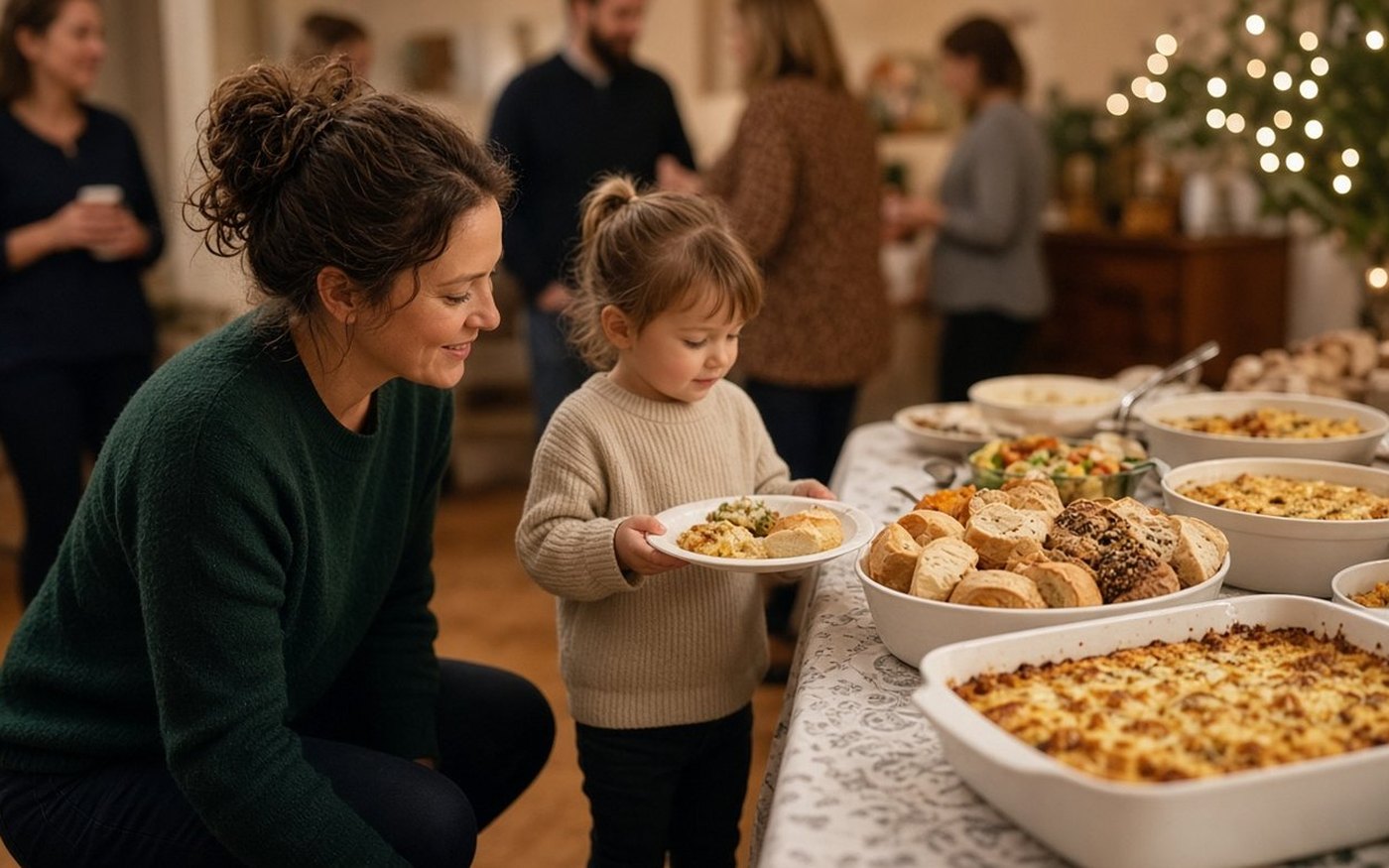
Buffet lines are not built for small hands. Plates are floppy, serving spoons are heavy, and the hot dishes sit right at the reach of a preschooler. Have one adult walk the line with the kids before the main rush, or fill their plates yourself while they wait at a seat. Let older children choose, with one rule: take a small amount of something, and come back for seconds.
Give them two or three foods they know and one small taste of something new, not a mountain. A plate a child can finish is better than one that ends up in the trash. Cut food at the table where you can see it, especially round foods like grapes and cherry tomatoes, sausage coins, and anything chewy. Our toddler snack guide has a short list of common choking risks worth knowing before party foods appear.
Then find them a seat. Children’s tables, the kitchen island, or a spot on the floor with a picnic blanket all work, as long as eating happens in one place. Walking around with a full plate is how cranberry sauce ends up on someone’s carpet, and how small kids choke while running. One seat, one plate, and an adult nearby is the plan.
Desserts, timing, and the hungry window
Potlucks rarely eat on schedule. If the invitation says 5:00, dinner might be 6:15. Feed young kids a small snack before you leave, so they arrive hungry but not desperate. If the meal is running late and your toddler is falling apart, it is fine to fix their plate early and quietly. Most hosts would much rather see a fed child than a melting one.
Decide the dessert rule in the car, not at the table. Something like “one dessert after you eat some dinner” is clear and easy to repeat. When cookies are within reach, a child who knows the rule asks instead of grabbing. If an aunt hands over a second brownie, let it go. One night of extra sugar is not a nutrition crisis, and arguing in front of the host is worse.
Manners, helping, and leaving on time
Potlucks are a good place to practice short, simple manners: say hello to the host, say thank you, and throw away your own plate. A school-age child can carry a dish in, help put out napkins, or help clear the dessert plates. These small jobs keep kids busy and connected to the party. Our guide to being a good guest has a few scripts you can practice on the drive.
Plan your exit before you arrive. With toddlers, ninety minutes is often plenty. Leaving while everyone is still happy is a better ending than staying until the meltdown. Say goodbye to the host, pick up your dish (or leave it if they want leftovers), and go. You can thank them again later with a short text or note.
Clean up your corner on the way out. Wipe the high chair or booster you used, pick up dropped napkins, and check the floor under your kids’ seats. Hosts remember the families who leave the room the way they found it.
This guide is also listed in our mealtime guides.
Quick FAQ
What should I bring to a potluck with kids?
Bring a dish your own kids like, such as rolls, fruit, noodles, or mac and cheese. It gives them a safe food at the party, and plain dishes are usually popular with adults too.
How do I handle food allergies at a potluck?
Assume shared dishes aren’t safe until you check ingredients yourself. Serve your child first, before spoons get mixed, and bring a backup meal they can safely eat.
Should toddlers eat at the potluck or before?
Give a small snack before you leave, then plan for them to eat at the party. If dinner runs late, fixing their plate early is fine.
The bottom line
A holiday potluck goes better with a small plan. Bring a dish your kids will eat, fix their plates before the rush, seat them in one spot, and decide the dessert rule before you walk in. Practice a hello and a thank-you, and leave while everyone is still having fun. That’s enough to make it a party you’ll say yes to again next year.