
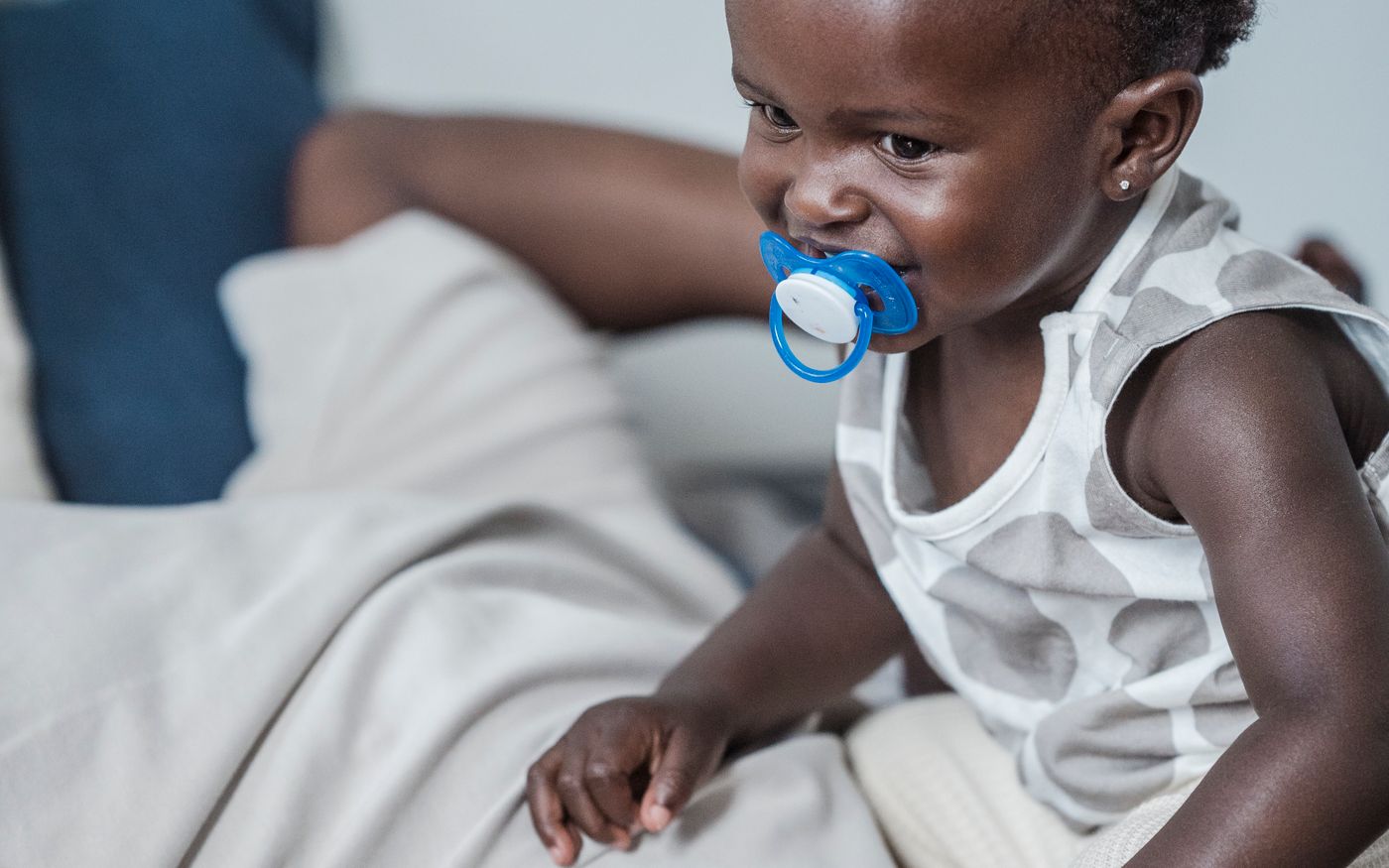
When to start
A pacifier is a useful soothing tool in infancy. Many families start thinking about weaning sometime after the first birthday, and dentists often suggest winding down by around age 2 or 3 because a long, frequent habit can affect how teeth line up. There is no single magic day. The best time is when your child has a few other ways to settle, and when you can live through a week of bumpier nights.
Don’t start during an illness, a move, a new sibling’s arrival, or the first week in a toddler bed if you can help it. One big change at a time is kinder to everyone. If sleep is already shaky after a crib to bed switch, let that skill settle first.
Daytime first
Most kids give up the pacifier more easily in the day than at sleep. Start there.
- Keep pacifiers in a basket, not in every room and pocket.
- Offer it only at rest times: nap, bedtime, and maybe the car if that’s a current need.
- When they ask during play, name the feeling and redirect: “Your mouth wants the pacifier. The basket is for nap. Let’s get your water / lovey / a snack.”
- Praise the times they go without it: “You played the whole morning without it.”
A few days of “only for sleep” shrinks the habit before you touch the harder part.
The bedtime pacifier
This is usually the last one to go, because it is tied to falling asleep. Keep the rest of the bedtime routine identical so only one thing changes. Give a clear, short warning a few days ahead: “On Friday, the pacifier stays in the basket at night. We’ll do books and your bear, and I’ll sit for a minute.”
Two common plans both work if you are consistent:
- A short goodbye ritual. Some families pack the pacifiers away, take them to the “pacifier fairy,” or trade them for a new stuffed animal. This works best for kids closer to 3 who like a story and a ceremony.
- A gradual fade. Pacifier only after lights out, then only in the crib or bed, then you take it once they’re asleep, then it’s gone. Slower, but gentler for younger toddlers.
Cold turkey is fine if you can stay calm through a few hard nights. Mixing methods—gone on Monday, back on Tuesday, gone again on Wednesday—is what usually stretches the process into weeks of protest.
What to say, and what to offer instead
- “The pacifier is all done. You’re safe. I’m here.”
- “Your bear can help your body get calm.”
- “It’s okay to feel mad. The pacifier is still done.”
Replace the sucking habit with something you can live with: a lovey, a hand on their back for a minute, white noise, or a drink of water before the last book. Don’t introduce a bottle or a sippy of milk in bed as a swap. That creates a new sleep association and isn’t great for teeth. If you’re already thinking about dental habits, our first dentist visit guide is a useful next read.
After it’s gone
Expect two to five harder nights, then a settling. Offer extra connection in the day: laps, books, and outdoor play. If they ask for it weeks later, use the same short line. Don’t bargain (“only in the car”). A clean, kind ending is easier than a new exception.
If sleep completely falls apart for more than a week, or your child seems unusually distressed, pause and talk with your pediatrician. You can always try again in a few weeks. Weaning is a skill, not a test of toughness.
Special cases: naps, the car, and daycare
If bedtime is going well but naps fall apart, keep the pacifier for naps for a few more days, then drop it the same way you did at night. The car is a common last hideout. If you need a calm ride this week, you can delay the car pacifier a few days, then leave it at home on a short trip first. Tell the caregiver or teacher the date it’s done so they aren’t offering one at daycare after you’ve stopped at home.
Thumb-sucking sometimes shows up as a replacement. That’s a different habit and doesn’t mean you failed. If it starts, stay matter-of-fact, offer the lovey, and mention it at the next dentist visit rather than starting a new battle the same week.
The same “one change at a time” approach works for a bottle, too. For an easy-first fade and a kinder bedtime swap, see weaning off the bottle.
This guide is also listed in our routines and behavior guides.
Quick FAQ
When should we start weaning the pacifier?
When you are ready to be consistent, often sometime in the toddler years. Starting, then handing it back every hard day, usually takes longer than a planned fade.
Should we drop daytime or bedtime first?
Daytime first is usually easier. Keep the bedtime pacifier a little longer if you need to, then make a clear plan for that one too.
What do we offer instead at bedtime?
The rest of the usual routine: a book, a comfort item if you want one, and your calm presence at lights-out. You do not need a prize for every night.
This guide is also listed in our sleep guides.
The bottom line
Start in the daytime, pick a week that isn’t already full of change, keep bedtime otherwise the same, and stay consistent once it’s gone. A calm, boring plan beats a perfect speech about being a big kid.