
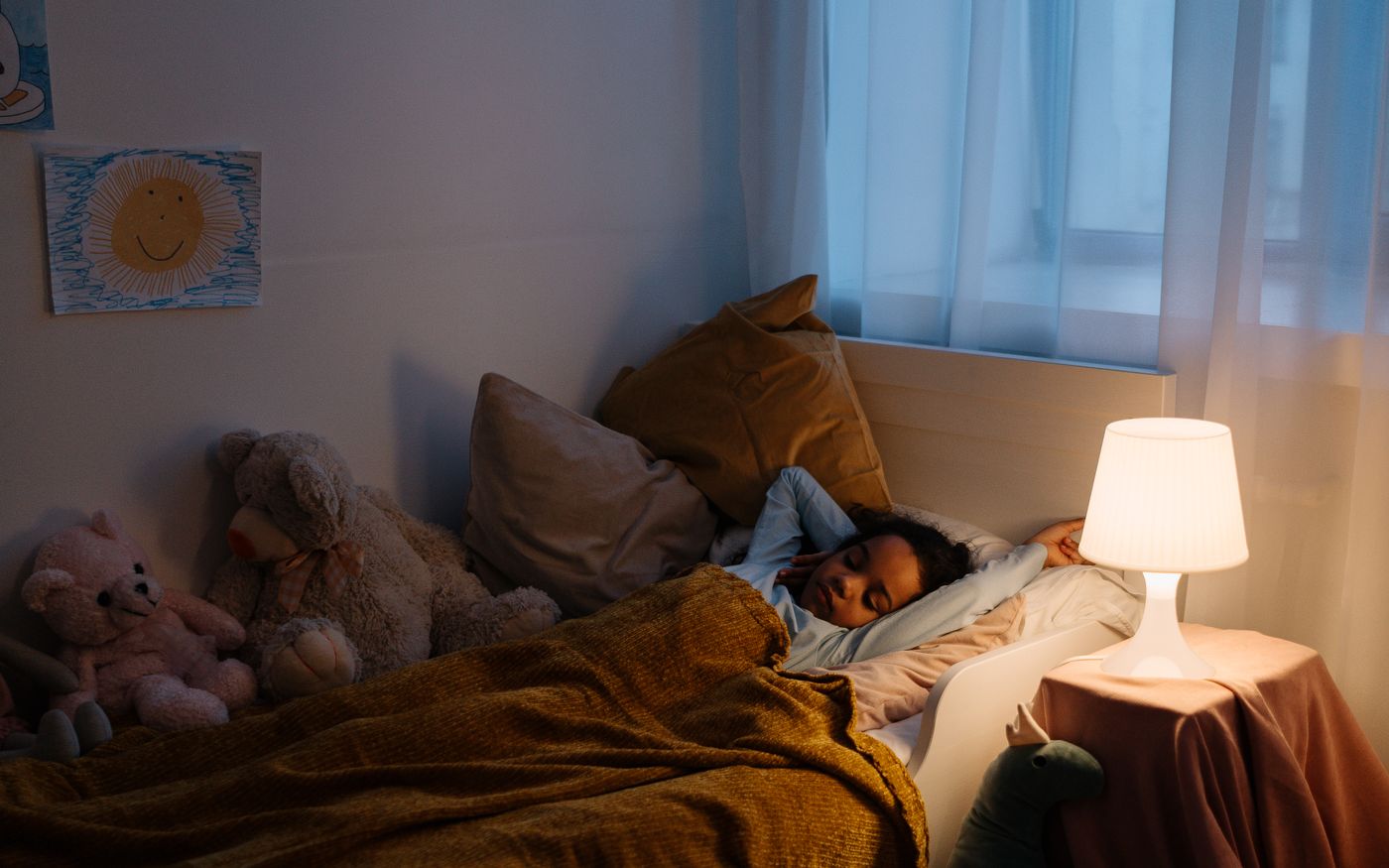
Don’t rush the switch
A crib is still the safest, simplest sleep space for many toddlers. You do not need to move a child to a bed at 18 months, or just because a new baby is coming, if the crib is still working. The best time to switch is when your child is consistently climbing out, or when they are clearly too tall for the crib to be used safely—not when a catalog says “toddler bed age.”
If you can, wait until closer to age 2.5 or 3. Older toddlers understand “stay in bed” a little better, and you’ll spend fewer nights walking them back down the hall. If a new sibling needs the crib, start the transition several weeks before the baby arrives so it doesn’t feel like a sudden eviction.
Signs it might be time
- They are climbing out, even with the mattress at the lowest setting
- The crib rail sits at or below chest height when they stand, which makes climbing more likely
- They are asking for a “big bed” and can follow a simple bedtime rule most nights
One leg thrown over the rail once is not an emergency. Repeated climbing is. If they’re getting out, it’s safer to move them than to add pillows, bumpers, or extra blankets to “soften” a fall.
Choose the bed and set up the room
You have three good options: a toddler bed that uses the same crib mattress, a twin bed with a snug rail, or a mattress on the floor. A floor mattress is simple, cheap, and low to the ground. A toddler bed can feel familiar because the mattress doesn’t change. A twin bed lasts longer, but only if you can keep them from rolling off at first.
Set the room up before the first night:
- Put the bed where the crib was, if you can, so the room still feels like the same sleep place.
- Use a fitted sheet on a firm, flat mattress. Skip loose blankets, pillows, and stuffed animals for younger toddlers who still roll a lot. A wearable blanket or sleep sack can bridge the gap if they used one in the crib.
- Keep the same sound machine, night light, and bedtime books you already use. The bedtime routine should stay almost identical—only the bed is new.
Safety first
A toddler who can get out of bed can get to everything in the room, and sometimes the rest of the house. Do a crawl-level sweep:
- Anchor dressers, bookshelves, and TVs. Drawer pulls become a ladder.
- Cover outlets, tie up window-blind cords, and lock windows.
- Move lamps, small toys, and anything that can be swallowed or pulled down.
- Gate the stairs. If you close the bedroom door, make sure you can hear them and that the room is safe to wander in.
- If they get up at night, a baby gate in the doorway can keep them in a childproofed room—as long as they cannot climb it.
For travel or holidays right after the switch, bring a familiar sheet or sleep sack and expect a few off nights. Our holiday visits sleep guide has a packing list that still helps once they’re in a bed.
A two-week transition plan
Days 1–3. Introduce the bed in the daytime. Let them sit on it with books, put a stuffed animal “to bed,” and talk about the new plan in simple terms: “Tonight you sleep in this bed. I’ll do bath, books, and song, then I’ll say good night. You stay in bed until morning.” Start at the regular bedtime, not a late one.
Days 4–7. Expect them to get up. Walk them back calmly, with as little conversation as possible. Use the same short line: “It’s sleep time. I’ll see you in the morning.” Put them back as many times as it takes. A long chat, a snack, or an invitation to the couch teaches them that getting up works.
Days 8–14. The novelty fades if you’re consistent. If they call out, wait a moment, then answer from the door rather than sitting down in the room. Praise in the morning—“You stayed in bed”—works better than a lecture at midnight.
What to do when they get out
They will. Plan on it. Dim the hallway so the trip back isn’t a party. If they appear at your bedside, walk them back with that same short script. Avoid turning on bright lights or starting a negotiation. If you need a check-in, keep it boring: blanket on, back rub for a few seconds, leave.
A simple visual—a picture card of a child in bed, or an okay-to-wake clock when they’re old enough—helps some preschoolers. For a 2-year-old, your feet doing the same walk-back is the real teacher.
Naps and setbacks
Keep naps in the same bed if that’s where they sleep at night. The first week, some kids skip a nap or take a shorter one. Protect quiet time anyway so the evening isn’t a disaster. Illness, travel, and teething can undo a few nights; return to the same plan rather than starting over with a new system.
If after two consistent weeks no one is sleeping, pause and look at the basics: is bedtime too late, is the room not safe enough to stay in, or was the move simply early? It’s okay to go back to the crib for a while if it’s still safe and they’re not climbing out. The switch will be easier in a few months.
A new toddler bed can collide with a new fear of the dark. For night-light setup and walk-back scripts that don’t become a second evening, see fear of the dark.
Try not to wean the pacifier in the same week you move to a toddler bed. When you are ready, our pacifier weaning guide has a gentle, consistent plan.
If you’re moving a toddler out of a crib to make room for a new baby, start weeks or months ahead so it doesn’t feel like an eviction. Our guide to preparing a toddler for a new baby covers the rest of the first-months plan.
A new bed and a dropped nap are easier one at a time. For the nap side, see transitioning off naps.
This guide is also listed in our routines and behavior guides.
Quick FAQ
When is it actually time to leave the crib?
When they are climbing out, or the crib is truly no longer safe or useful—not because a birthday arrived. Many kids can stay in a crib longer than social media suggests.
How do we keep a toddler in a new bed?
A simple room setup, a consistent bedtime routine, and a calm, boring return when they get out. A two-week stretch of consistency matters more than a new gadget.
What if nights fall apart after the switch?
Return them to bed the same way each time, protect the routine, and pause other big changes if you can. If safety is the issue, fix the room before you work on the habit.
This guide is also listed in our sleep guides.
The bottom line
Wait until you need the change, make the room safe, keep the bedtime routine the same, and walk them back without a big production. A toddler bed is a new skill, not a personality test—and most kids learn it when the plan stays boring and kind.