
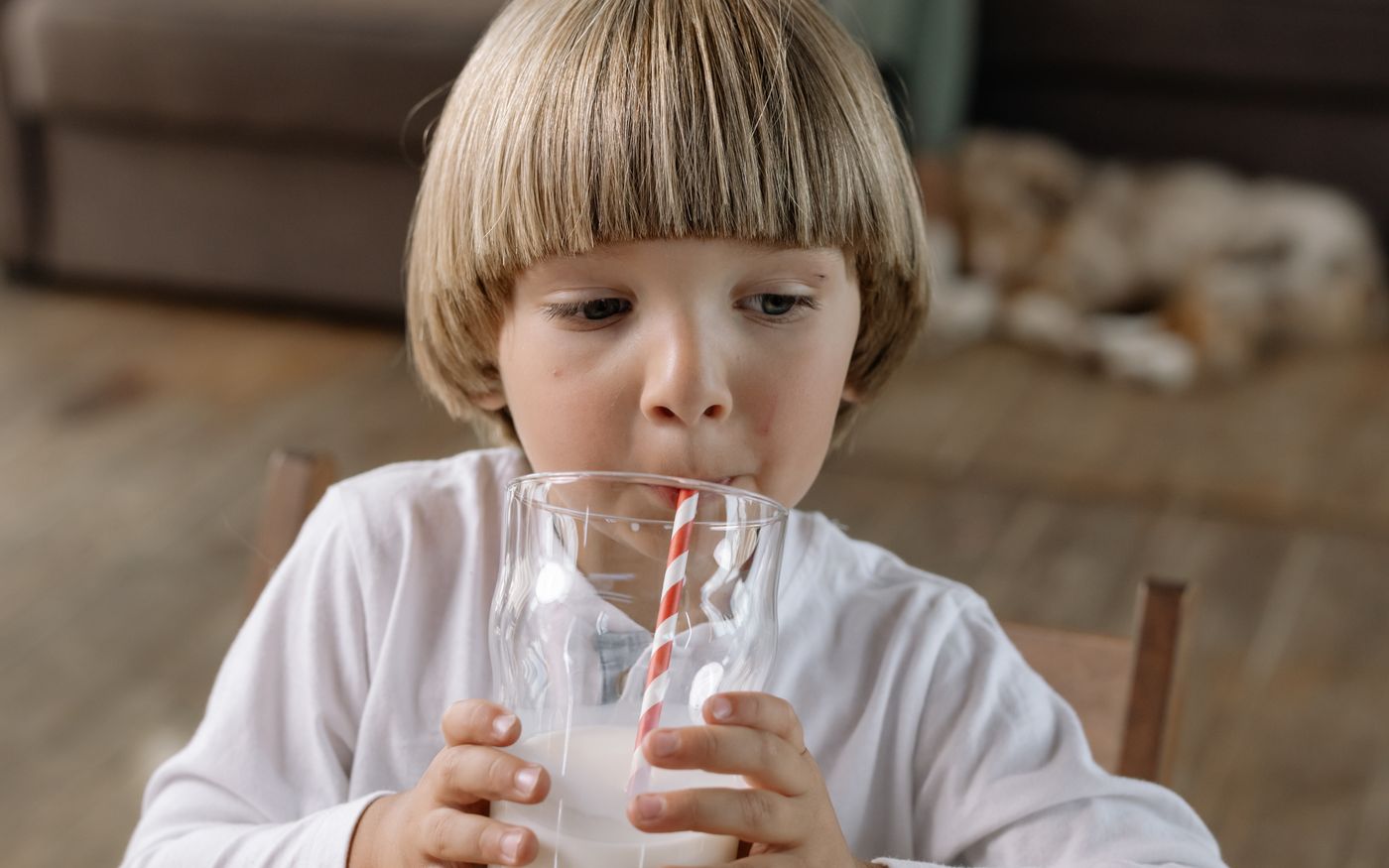
Water for thirst, milk as a food, juice as a sometimes
Once a child is past the first birthday, drinks work better when they have jobs. Water is the everyday thirst drink. Milk is more like a food—useful at meals, easy to overdo between them. Juice is optional, not a nutrition requirement, and it causes fewer problems when it is rare and sits with food instead of traveling around the house. That map is the whole post, in one paragraph, and the rest is how to live it without a fight at the cup.
This is not a guide to weaning off the bottle. If they’re still on bottles, start there. This is about what goes in the cup, and how much, after bottles are out or on their way out. It also sits next to how much toddlers should eat and iron-rich foods for toddlers, because a day of sipping can quietly shrink the plate.
Milk: useful, not all afternoon
Many toddlers do well with something in the neighborhood of two cups of milk a day, offered with meals, not as a constant companion. Your pediatrician can tailor that if growth, diet, or allergies change the plan. More than that, especially from a sippy they carry around, often means they’re less hungry for iron-rich foods and other solids. Milk is a good drink. It is a poor all-day job.
Offer milk in a cup at the table, then close the kitchen. Water can be available if they’re thirsty later. If they ask for milk between meals, you can say, “Milk is at lunch. Water is on the counter.” Repeat it without a speech. Night milk is a separate habit; if it is already a bottle in bed, use the weaning guide, and don’t add a new bedtime cup “just this once” if you’re trying to get milk back into mealtimes.
Plant-based drinks are not automatic one-for-one swaps. If you use one, ask your pediatrician or a dietitian which product actually fits a toddler diet, and don’t assume a trendy carton covers the same jobs as cow’s milk. If dairy is off the table for allergy or family reasons, get a plan rather than guessing from a label.
Water, juice, and the cup itself
Water can start earlier than the first birthday in small sips at meals, and after that it becomes the default. Keep it boring and available. A cup on the table, a cup they can ask for, no need for flavor packets. If they refuse water because juice trained their taste, water will feel bland for a while. That’s expected. Keep offering it anyway.
Juice is not required. Whole fruit does the same job with more chewing and less sugar in a cup. If you serve juice, keep the portion small, offer it with a meal, and skip all-day sippy juice. Diluting it can help some families; it should not become a third “meal” they walk around with. Our toddler snack time is a better place for fruit than a bottle of juice in the car, unless you’re on a long trip and already planned it.
Open cups and simple straw cups at the table beat a no-spill cup that follows them from room to room. Spills happen. A washable mat and a short meal will survive them. Self-feeding milestones include early cup practice; the toddler years are when that practice should turn into “drinks have a place.” For mornings, drinks belong with breakfast, not as a delay tactic—see busy-morning breakfast ideas.
What to do when the sipping is the problem
If meals are a struggle and you realize a large milk intake is in the way, cut back gradually: serve milk only at meals, shrink the cup, add water at snack. Don’t go from unlimited milk to none in a day unless a clinician has a reason. Expect some protest. Offer food at the usual times anyway.
Flavored milks, sports drinks, sodas, and sweet teas don’t need a toddler job. They’re occasional at most, and they don’t fix picky eating. If grandparents pour juice as a welcome, decide the house rule in advance and be kind and specific: “Water or milk with lunch, please.”
Call the pediatrician if you’re unsure about milk amounts, if your child won’t drink much of anything, if peeing has changed, or if diet is already restricted. Don’t start toddler formula, “transition” drinks, or supplements because a shelf looked official. Those can be useful in some cases; they should be a recommendation, not a panic buy.
A simple family script is enough: water for thirst, milk at meals, juice rarely, cups at the table. Write it on a note for babysitters if you need to. The drink plan should support the food plan, not replace it.
Drinks stay ordinary at dinner, even when the food looks like breakfast. See breakfast for dinner.
This guide is part of our mealtime guides, where related pieces are grouped in one place.
Quick FAQ
How much milk does a toddler need?
Often a couple of small servings a day with meals, not an open cup all afternoon. Milk is a food. Water is the drink for thirst.
Is juice ever okay?
A small amount, with a meal, is a sometimes drink—not a sippy-cup habit. Water and milk cover the real need. Diluting juice all day still keeps sweet taste in the cup.
What cup should we use after bottles?
An open cup or a simple straw cup, at the table, is enough. The cup matters less than ending all-day sipping. Our bottle-weaning guide covers the transition itself.
The bottom line
Give water the thirst job, keep milk mostly at meals in a modest amount, and treat juice as optional and occasional. Cups live at the table so drinks don’t crowd food all afternoon. Ask your pediatrician to tailor amounts if growth or diet is already being watched.