
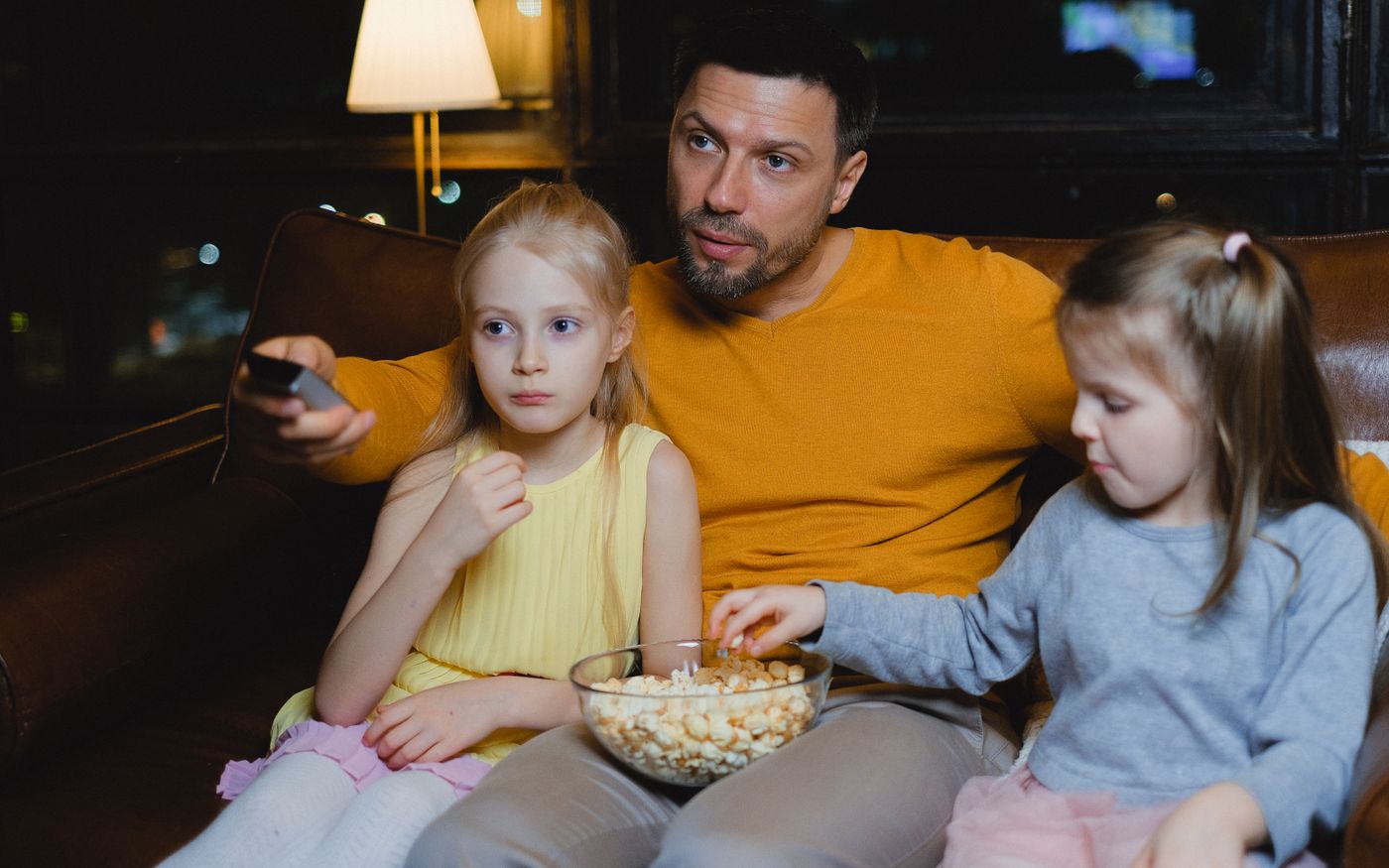
Movie night is a short ritual, not a film festival
A family movie night works when it’s regular, the movie actually fits the youngest kid in the room, and everyone knows when it will end. It can be Friday pajamas and a film you’ve already seen, not a three-hour premiere that starts at 8. The same “repeatable and short enough” idea as family game night applies here.
Pick a start time you can keep on a school night or save it for the weekend. Dim the lamp, put the phones in another room if you can, and sit together. A movie night where one adult is answering email on the cushion is just TV in the same room.
Choose the movie for the youngest, then keep it kind
If a four-year-old and a ten-year-old are watching together, the four-year-old’s limit is the limit. A familiar favorite beats a new “big kid” movie that will scare the youngest and split the room. Preview anything you haven’t seen. Ratings help; your child is still the measure.
Have a pause plan: if someone is scared or done, you stop, you don’t shame, and you can switch to a comfort episode or call it a night. This is one place your screen-time rules by age should be consistent, not a free-for-all because it’s Friday. One movie (or one movie plus a short) is the event.
Let kids help choose from two good options you already approved, not the entire catalog. “This one or that one, then we press play at 6:30.” If they argue, you pick and they can choose next time. A vote among three kids can take longer than the film.
Snacks, seats, and the room
Keep snacks simple and already prepared: popcorn, apple slices, a cheese stick, or other easy toddler snacks on a tray they can reach without walking over people. Water in cups with lids if that’s your house. Eat the messier food at the table first if you don’t want a sofa full of sauce.
Give everyone a seat that will last: a cushion on the floor, a corner of the couch, a blanket. If two kids fight over the “best” spot, assign seats and rotate next week. A bathroom trip and a water refill before you press play cuts the first pause. For a rainy afternoon, movie night can start earlier—see rainy-day indoor activities—and still end before everyone is feral.
When it ends, end it
When the credits start, turn the lamp back on and go to the next thing: pajamas, teeth, a short tidy of the bowls. Don’t autoplay the sequel. If they want to talk about a scary or sad part, make a little room for that at the table or in the dark of their bedroom, and keep your answers plain. You’re allowed to say, “That part was a lot. You’re safe at home.”
On a school night, start early enough that bedtime still happens. A movie that lands at 10 p.m. will color the next morning more than it was worth. If the film is long, save it for Saturday or watch it in two parts. The ritual is “we sit together and watch one thing,” not “we finish the runtime no matter what.”
Build a tiny tradition around the night so it feels different from ordinary TV: the same blanket pile, a “now playing” note on a sticky, or a child who is in charge of pressing play. If you have a baby or a toddler who won’t last a full film, start with a short and let them drift to bed while older kids finish with one adult.
Guests can join if you keep the same rules: one approved movie, a stated end time, and a snack already made. Tell the other parent what’s playing and when you’ll be done. If the group is restless, switch to a game rather than putting on a second film you didn’t plan to show.
Some movies will raise questions later—about fairness, a mean character, or something sad. You don’t need a lecture at the credits. One sentence at the time, and a follow-up the next day if they’re still thinking about it, is enough. If a film was a miss, say so, and put a comfort favorite back in the rotation next week.
If a child falls asleep mid-film, let them, and don’t restart the ending at 9:30. You can tell them how it ended in the morning, or watch the last ten minutes another day.
A game on TV is not a movie you have to finish. For a short spectator plan, see watching a game with kids.
Quick FAQ
How long should family movie night be?
One movie chosen for the youngest, plus a defined snack, then bed. It is a short ritual, not a film festival.
What if older kids want a later movie?
Save that for a different night, or start earlier so the youngest can leave when it ends. A movie that scares the youngest is the wrong pick for a shared night.
Should we let it run past bedtime?
A rare, labeled exception can be fine. As a weekly habit, end when the movie ends and keep the usual wind-down. A movie night that wrecks tomorrow stops being fun.
A movie with popcorn makes an easy countdown night. See December countdown ideas.
The bottom line
Family movie night should fit the youngest kid, start at a time you can keep, and end when the credits do. Approve two choices, keep snacks simple, sit together, and protect bedtime. A short, repeatable night will beat a rare, oversized one.