
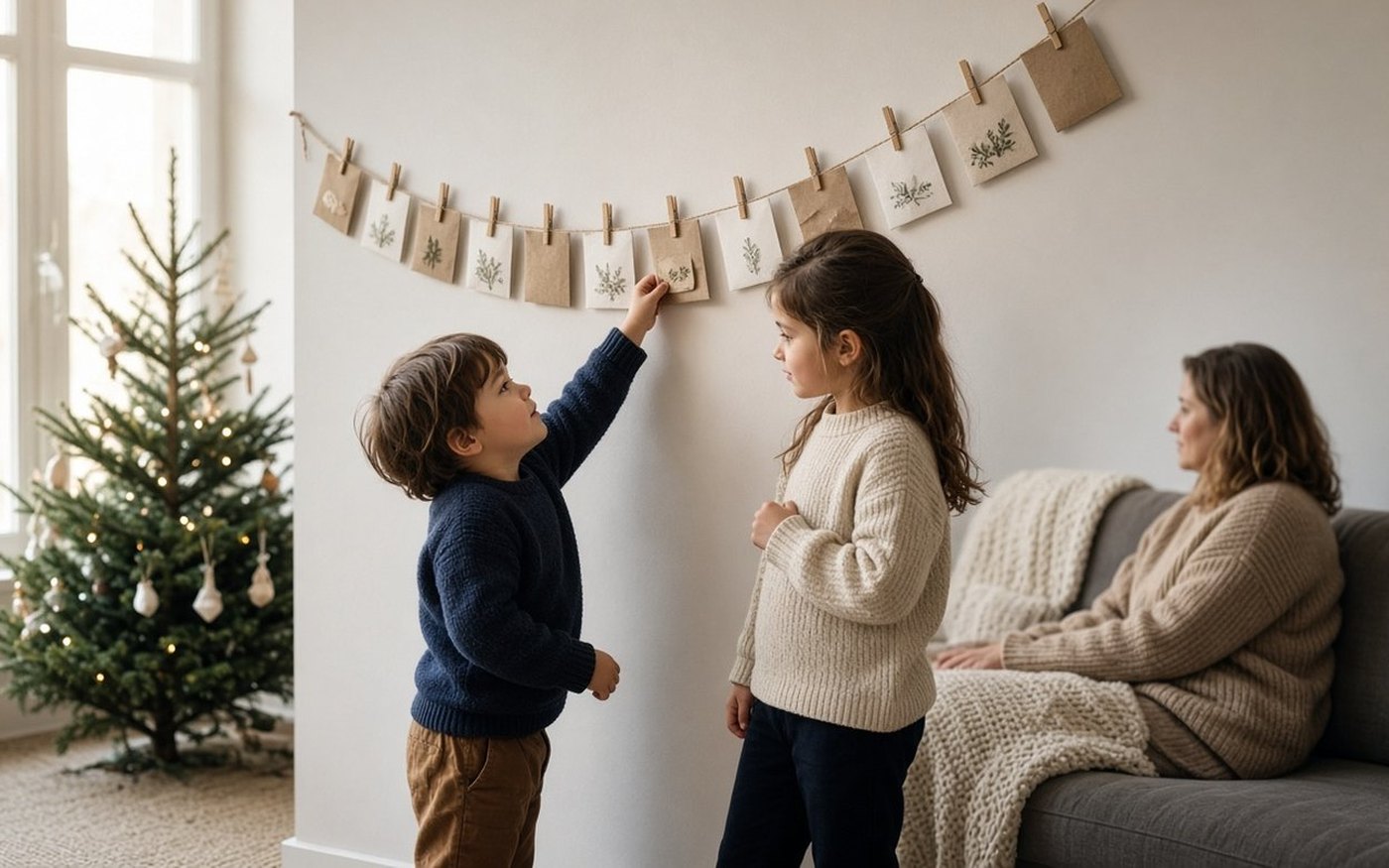
A countdown is for waiting, not for buying
December is long when you are five. A countdown helps kids see how many days are left before a holiday, a trip, or a visit, and it gives each morning a small, predictable thing to look forward to. That is the whole job. A countdown does not have to be a store-bought calendar full of toys, and it does not have to be a new activity every night that leaves you more tired by the 18th than the kids are excited.
The best countdowns are short, cheap, and easy to keep going when the week falls apart. This guide covers a few simple formats, how to fill them without a shopping trip, and how to keep the countdown from becoming one more December chore. It works for Christmas, Hanukkah, a winter break, or the days until grandparents arrive.
Pick one simple format
Choose a format you can set up in one evening and leave alone. A few that hold up well:
- Paper chain. Kids make one link for each day and tear one off each morning. It is free, it teaches counting, and the shrinking chain is a visual calendar a preschooler understands.
- Numbered envelopes or bags on a string. Clip small envelopes to a ribbon with clothespins. Each one holds a slip of paper with a tiny activity, a joke, or a note.
- A calendar on the fridge. Kids cross off each day with a marker or put a sticker on it. Add a small drawing on the big day.
- A stack of books. Wrap or bag one library or shelf book per night and read it at bedtime. Our guide to reading with kids every day pairs well with this one.
You don’t need all of them. One format, the same every year, is easier for everyone and becomes a tradition faster than a new idea from the internet each December.
Fill it with small things, mostly not stuff
If you use envelopes or bags, most of the slots can be tiny activities rather than presents. Kids remember doing things more than they remember the trinket from day 9. Good fillers take five to twenty minutes and don’t need planning:
- Hot cocoa after dinner, or popcorn with a holiday movie (see our family movie night guide).
- Drive or walk around the neighborhood to look at lights.
- Make a card for a grandparent, teacher, or neighbor.
- Pick one toy to donate or one canned food for a drive.
- Bake or decorate one batch of cookies (our holiday baking with kids guide keeps it short).
- Dance party in the kitchen to one holiday song.
- Pajamas and breakfast for dinner.
- Write or draw one thing you’re thankful for.
Mix in a few days that say “sticker” or “a joke.” Not every day needs a project. If you want small treats, keep them actually small: a candy cane, a pencil, a sticker, a mini puzzle. A countdown where every pocket holds a toy tends to set up a gift arms race, and it makes the actual holiday feel less special.
Plan for busy nights and the morning rush
Put the busy nights on paper first. Look at the December calendar, mark the school concerts, late work nights, and travel days, and fill those slots with the easiest activities: a sticker, a joke, or “read a book in bed.” Save the bigger ones (lights, baking) for weekends.
Decide when the countdown happens. Morning works for paper chains and stickers; it gives kids a reason to get to the kitchen. Evening works better for activities. Pick one and keep it there so the countdown doesn’t become a negotiation at the door. If you have a tight school morning already, our school morning checklist is worth looking at before you add something new.
If you miss a day, catch up the next day without guilt. Two links off the chain is fine. The countdown is a tool for the kids, not a test for you.
Siblings, fairness, and the big day
With more than one child, decide who opens or tears each day ahead of time. Alternate, or give each child their own chain. Write the names on the envelopes if it helps. Fairness fights are easier to prevent than to referee at 7 a.m.
Toddlers don’t really understand dates yet, and that’s okay. They’ll enjoy the ritual long before they understand it. Older kids can help make the chain or write activity slips for younger siblings, which is a good job and a quiet lesson in giving. Families celebrating different holidays, or more than one, can use one countdown for the whole season.
Keep the last day simple. The countdown ends, and the holiday or trip begins. Some families leave the last envelope empty on purpose, or put in a note from each parent. That small ending is enough. Afterward, save the string or envelopes in the decoration box so next year’s setup takes five minutes.
This guide is also listed in our holiday and season guides.
Quick FAQ
What age is a holiday countdown good for?
Preschoolers and up get the most from it, because they can see the days shrink. Toddlers enjoy the ritual even before they understand dates.
What can I put in a countdown besides toys?
Short activities: looking at lights, cocoa, a card for someone, a donation, a cookie batch, or a book at bedtime. Stickers and jokes fill busy days.
What if we miss a day?
Catch up the next day. Doing two at once is fine. The countdown is for fun, not a streak to protect.
The bottom line
A December countdown works when it is simple: one format, mostly small activities, easy slots on busy nights, and a clear plan for siblings. A paper chain or a string of envelopes gives kids a way to see the wait, and a few short traditions they’ll ask for again. Keep it cheap and repeatable, and it will still be fun on day 20.