
Tell the truth, in a short preview
A doctor visit is easier when it isn’t a surprise. The day before, or on the way, say what will happen in ordinary words: “We’re going to the doctor’s office. They’ll check how you’re growing, look in your ears, and listen to your chest. I will stay with you.” If shots are on the plan, add one honest sentence: “You may also get a shot. It can feel like a quick pinch. Then it will be done, and I’ll be right here.”
Don’t promise it won’t hurt if it might. Don’t hide a shot until the last second if you can help it—that teaches them the office is a place where surprises happen. A short, true preview is the same approach we use for a first dentist visit and a first haircut.
Play doctor at home, and pack a small kit
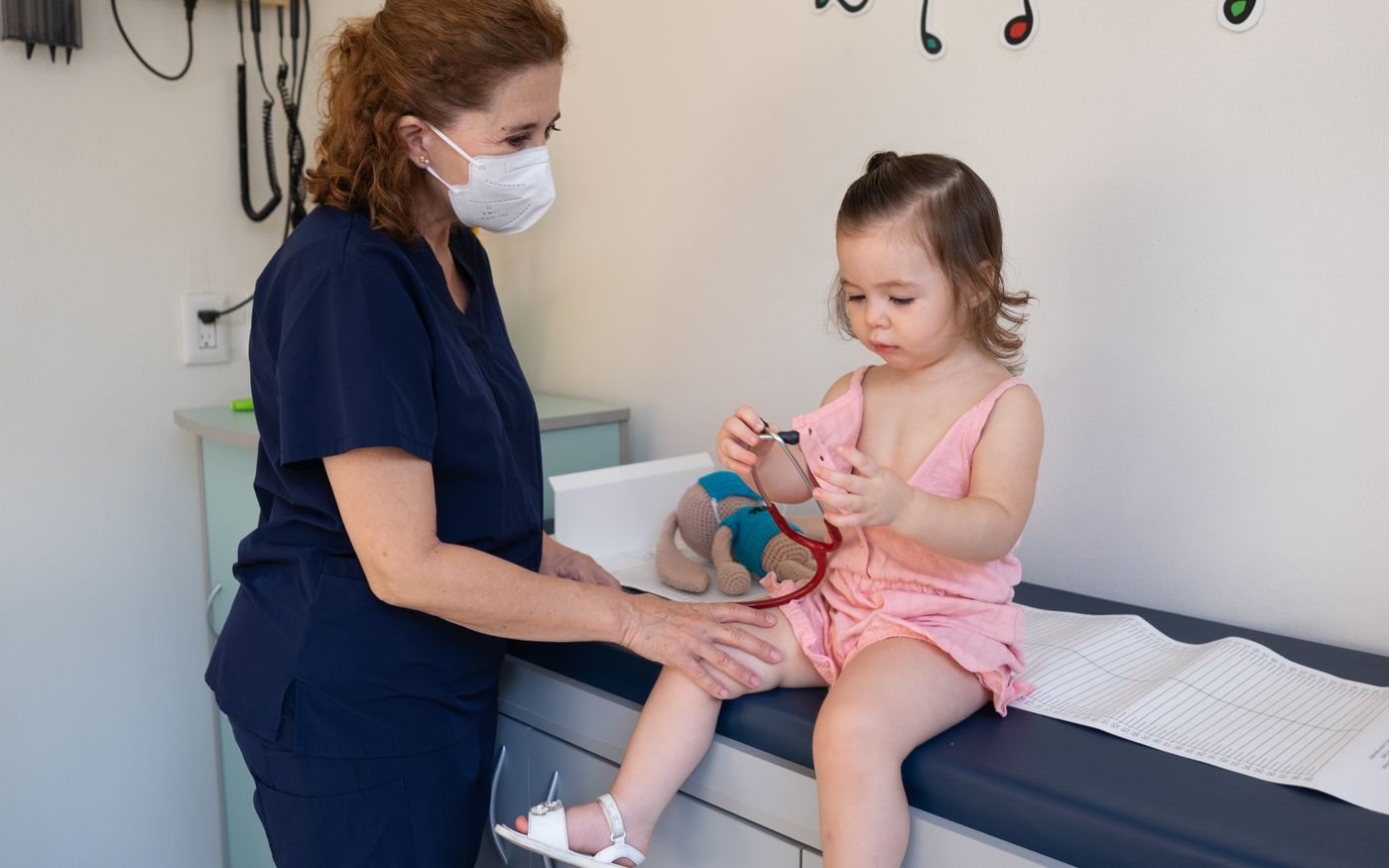
The night before, let them listen to a stuffed animal with a toy stethoscope, look in a teddy bear’s ears with a flashlight, or practice sitting on the “exam table” (the sofa). If shots are coming, you can press a finger quickly on a doll’s arm and then give the doll a hug. Keep it light. The point is familiarity, not a lecture about vaccines.
Pack a snack, a comfort item, and a small book or toy. A backup shirt is useful if they get upset or if a visit includes a messy exam. Wear easy clothing—a short-sleeved shirt beats a complicated outfit in a small exam room. If you can, book a time of day when your child is usually at their best, not at the edge of a nap.
In the waiting room and on the table
Arrive a few minutes early, but not so early that the waiting room becomes the whole event. Let them look around, name what they see, and sit close to you. If the wait gets long, a book or a short walk to a window is better than a new screen habit you’ve never used before, unless a screen is already your planned tool for this visit.
In the room, stay where they can see you. You can hold them in your lap for parts of the exam, or stand at the table with a hand on their leg. Ask the clinician if they can start with the least invasive steps (height, weight, listening) and save ears, throat, or shots for last. A job helps some kids: “Hold your bear,” “Take a deep breath,” “Count with me.”
Shots: comfort holds, one job, and aftercare
If you know shots are coming, tell the nurse or doctor how your child usually does and what has helped before. Many offices are happy to use a comfort hold—your child in your lap, facing you, or tucked against your chest with an arm free. You being the safe base matters more than a perfectly still, independent sit.
In the moment, short language is enough: “Quick pinch, then we’re done. I’ve got you.” A deep breath, a squeeze of your hand, or a silly sound can help some kids; others just want it over. Afterward, name what they did—“You sat with me and it was done”—and offer a cuddle and a snack. A small bandage can be a badge if they want one, not a requirement.
A little soreness, a brief fuss, or feeling off later in the day can happen. Follow the aftercare your clinician gives you, and use your usual comfort tools at home. If you’re ever unsure whether a fever or reaction needs a call, use the same judgment you would on a sick day and call the office.
If they panic, or if you dread it too
Some kids will cry. Crying is allowed. Your job is to stay close and finish the needed care as kindly as possible, not to talk them into cheerfulness mid-shot. If a visit goes poorly, don’t turn the car ride into a lecture. Later, at home, you can retell it simply: “The shot was hard, and it’s over. Next time I’ll stay with you again.”
If fear is intense, talk with your pediatrician before the next visit about what the office can adjust: a quieter room, a different hold, numbing spray or vibration if they use it, or a shorter wait. For kids who struggle with any new place, the feeling language in talking to kids about feelings helps more than “be brave.” Brave is optional. Safe and honest is the bar.
Quick FAQ
Should we tell kids that a shot will hurt?
Yes, honestly and briefly: it may pinch or sting, and it will be over quickly. A surprise poke is harder than a true preview.
What actually helps during the shot?
A comfort hold, one job like squeezing your hand or looking at a book, and a calm grown-up. Afterward, praise the coping, not only the stillness.
What if they panic in the waiting room?
Arrive with a little time, bring a small familiar item, and ask if you can wait in a quieter spot. You can also tell the nurse you will need a minute before you go back.
This guide is also listed in our health and safety guides.
The bottom line
Preview the visit in a few true sentences, practice with a stuffed animal, stay in sight, and tell the truth about a pinch if a shot is coming. A doctor visit doesn’t have to be a performance. It has to be a place they can trust you—and come back to.